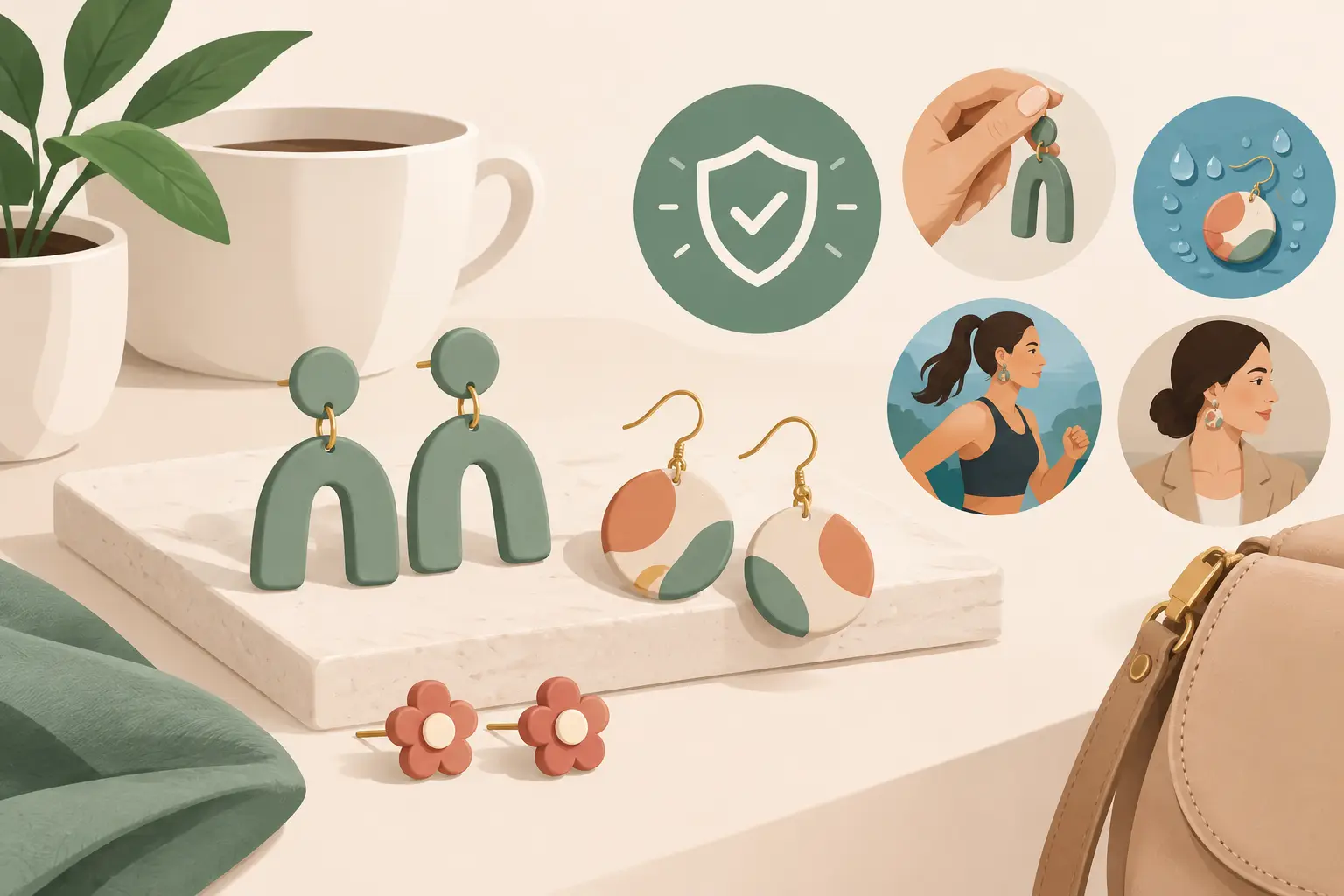
A good pair of clay earrings should feel like a joyful finishing touch, not something you have to worry about all day. This clay jewelry durability review looks at what handmade clay jewelry can realistically handle, what makes one piece last longer than another, and how a little care protects the color, shape, and personality you fell in love with.
Polymer clay jewelry has earned its place in everyday accessory collections because it can be wonderfully lightweight, colorful, and expressive. It also deserves an honest conversation. Clay is not metal, and a handmade statement earring is not meant to be treated like a piece of sports equipment. When it is thoughtfully made and worn with reasonable care, though, clay jewelry can stay beautiful for years.
What Clay Jewelry Is Made to Handle
Most artisan clay jewelry is made from polymer clay, a flexible modeling material that hardens when cured at the correct temperature. Once properly cured, it is far stronger than its soft, uncured appearance suggests. A finished clay earring can handle everyday movement, normal handling, and being tucked into a jewelry box after wear.
The key word is properly. Durability begins long before a piece reaches your jewelry tray. The clay needs to be conditioned, shaped without creating weak stress points, and cured thoroughly according to the material’s requirements. Under-cured clay can be brittle. Clay that is too thin in the wrong area can snap. A piece with careful construction has a noticeably different feel: it is light, smooth, and secure without feeling flimsy.
That makes polymer clay especially lovely for earrings. Larger designs can make a colorful statement without pulling heavily on the ears, and smaller styles can become easy, reliable daily favorites. Necklaces, bracelets, and decorative pet charms can also be durable, but their design needs to account for more frequent contact, movement, and friction.
Clay Jewelry Durability Review: The Honest Answer
Is clay jewelry durable? Yes, within the right expectations. Well-made polymer clay jewelry is durable enough for regular wear, brunch dates, office days, celebrations, gift giving, and all the little moments when you want your outfit to feel more like you.
It is not indestructible. Dropping a piece on a hard tile floor, stepping on it, bending a delicate pendant, or tossing earrings loose into the bottom of a packed handbag can cause damage. Thin details, pointed edges, and long dangling components naturally need more protection than simple studs or compact hoops.
This is not a flaw unique to clay. Every jewelry material has a trade-off. Fine chains can tangle, plated metals can wear over time, gemstones can chip, and glass can break. Clay offers a different balance: low weight, rich color possibilities, playful shapes, and handmade detail in exchange for a bit of mindful handling.
For many shoppers, that exchange is more than worth it. A bold pair of clay earrings can bring color and confidence to an everyday outfit without feeling heavy or overly precious. The secret is choosing pieces made with care and giving them the same gentle attention you would give any favorite accessory.
Construction Matters as Much as the Clay
When you are comparing handmade clay jewelry, look beyond the design alone. A beautiful arch, flower, or abstract shape should also have thoughtful construction behind it.
Thickness is one factor. Earrings do not need to be bulky to be durable, but extremely thin clay can be more vulnerable around holes, narrow connectors, and sharp corners. A maker who understands the material knows where a design needs a little more support while still keeping the piece comfortably lightweight.
Hardware matters, too. Jump rings, posts, earring hooks, clasps, and necklace attachments take on much of the daily strain. Quality findings and securely attached components make a real difference. For stud earrings, the post should sit firmly in place. For dangles, connectors should move freely without pulling against the clay. For necklaces and bracelets, attachment points should be designed to avoid forcing the clay to bear more tension than it should.
Surface finishing can also affect longevity. A smooth, cleanly finished piece is easier to wipe down and less likely to catch on fabrics. Some designs use a protective finish, while others celebrate the soft matte look of clay itself. Neither choice is automatically better. The best option depends on the design, the intended finish, and how the piece will be worn.
Which Clay Pieces Hold Up Best?
Compact clay studs and simple drop earrings are often the easiest styles for daily wear. Their small size means fewer opportunities for accidental bending or impact, and they are easy to store safely. Medium-sized dangles can also wear beautifully when their connection points are secure and the clay is appropriately thick.
Large statement earrings can absolutely be durable, but they ask for a little more awareness. They may brush against a coat collar, catch in thick hair, or knock against a phone during a busy day. That does not mean you should skip the dramatic pair that makes you smile. It simply means taking them off before a workout, a swim, or a long nap is a smart habit.
Clay necklaces and bracelets vary more because they are exposed to perfume, lotion, table edges, wrists resting on desks, and frequent contact with other surfaces. Designs with sturdy cords, chain components, and protected clay elements tend to be better suited for repeat wear. Decorative pet jewelry should be chosen carefully as well. It can be charming for photos or special occasions, but active pets may put far more stress on an accessory than a delicate handmade design is intended to handle.
Everyday Habits That Help Clay Jewelry Last
Caring for clay jewelry does not need to feel fussy. Think of it as a small ritual that lets your favorite handmade pieces stay part of your story.
Put clay jewelry on after applying hairspray, perfume, sunscreen, lotion, and makeup. These products can leave residue on the surface and may affect hardware over time. When you take your jewelry off, place it in a dry pouch, a compartmentalized box, or a soft-lined dish rather than leaving it loose with heavier pieces.
Avoid wearing clay jewelry in the shower, pool, hot tub, or ocean. Water itself is not always the greatest concern, but soaps, chlorine, salt, moisture trapped around metal hardware, and accidental knocks can shorten a piece’s life. Remove it before exercising, sleeping, gardening, or doing chores that involve chemicals or lots of movement.
If your jewelry picks up makeup or everyday dust, gently wipe it with a soft, slightly damp cloth. For a stubborn smudge, use mild soap and water sparingly, then dry it completely. Skip harsh cleaners, acetone, alcohol-heavy products, abrasive sponges, and ultrasonic jewelry cleaners. Those methods are too aggressive for many handmade materials and finishes.
What to Do if a Piece Bends or Looks Scuffed
A slight bend does not always mean a clay piece is ruined. Properly cured polymer clay has some flexibility, especially in thinner designs. Let the piece rest flat and avoid repeatedly bending it back and forth, which can create stress over time. If a component becomes loose, do not keep wearing it until it fails completely. Set it aside and contact the maker if repair guidance is available.
Small surface marks can sometimes be cleaned gently, but deep scratches, cracks, or broken hardware may need professional repair or replacement parts. Handmade jewelry is worth treating with patience. A maker may be able to offer care advice that fits the exact design, finish, and finding used.
The Best Measure of Durability Is Thoughtful Wear
The most durable piece is not always the heaviest or simplest one. It is the piece made with intention, chosen for the life you plan to live in it, and cared for as a small work of art. At Scott Jewelry Design, that balance matters: jewelry should feel expressive enough for your brightest days and easy enough to reach for again and again.
Wear the colorful earrings. Gift the meaningful necklace. Let the handmade details make an ordinary outfit feel personal. Then give each piece a safe place to rest when the day is done, so its color and creativity can keep showing up for the moments ahead.