A favorite pair of clay earrings can pick up a little real life: foundation near the edges, dust in tiny textures, or a faint smudge from being tucked into a purse. The good news is that knowing how to clean clay earrings does not require a cabinet full of specialty products. A gentle touch and the right materials will help protect the color, shape, and handmade details that make each pair feel special.
Most handmade clay earrings are made from polymer clay, a durable material that is cured in an oven. Even so, they are not indestructible. Care matters most around delicate details, surface finishes, painted accents, resin coatings, and the metal findings that connect your earrings to their hooks or posts.
How to Clean Clay Earrings Gently
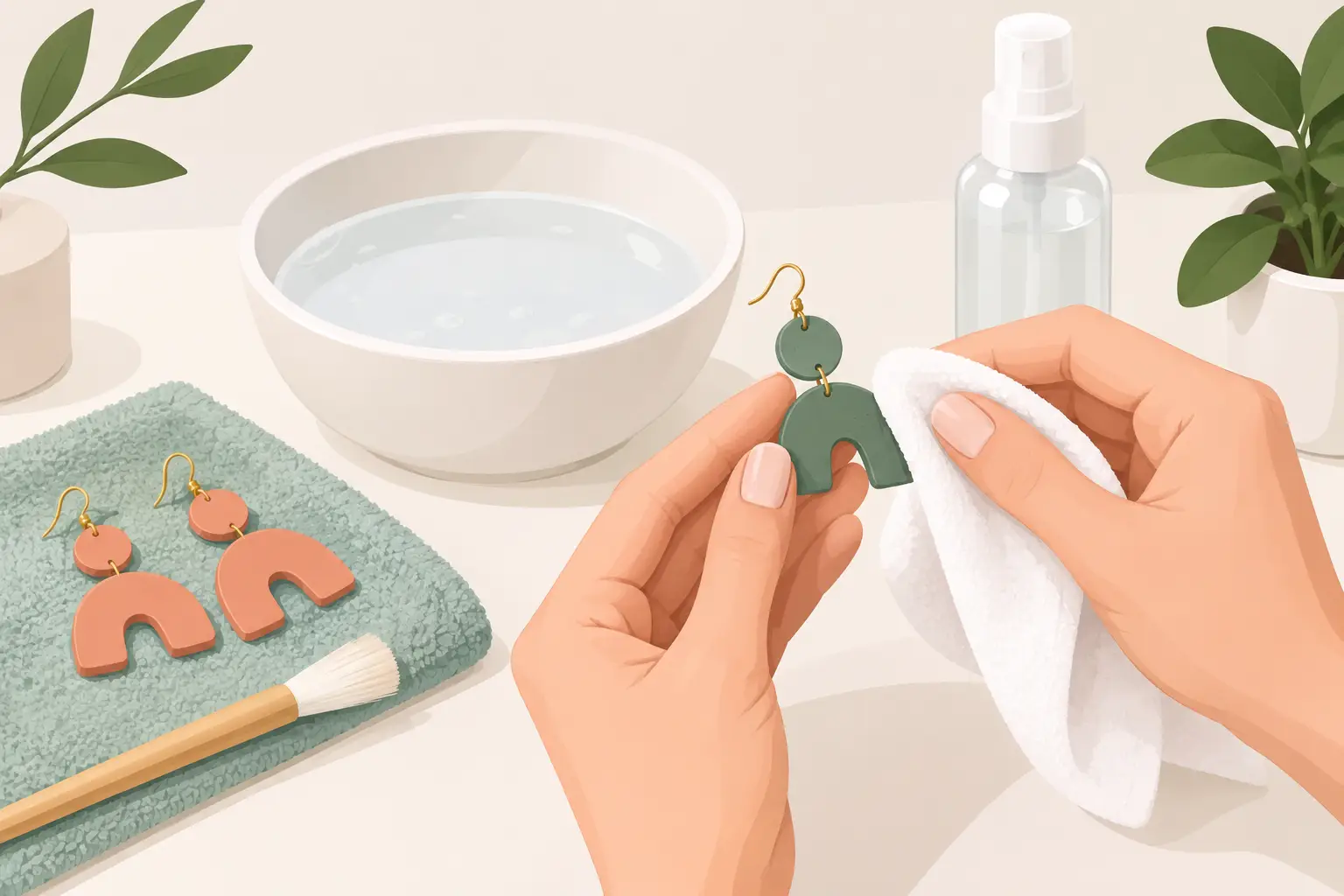
Start with the least aggressive method. For everyday dust or a small amount of surface residue, use a soft, dry microfiber cloth. Hold the earring in the palm of your hand rather than by the hook, then lightly wipe the front, back, and edges. A microfiber cloth is soft enough for most smooth polymer clay surfaces and helps avoid the tiny scratches that rough paper towels can leave behind.
If dry wiping does not do the trick, dampen a clean corner of the cloth with plain water. It should feel barely damp, never wet enough to drip. Gently rub the affected spot in small circles, then use the dry side of the cloth to remove any remaining moisture. Let the earrings air-dry completely before wearing or storing them.
For a little more cleaning power, add one tiny drop of mild dish soap to a small cup of water. Dip the cloth into the mixture, wring it out thoroughly, and clean only the clay surface. Follow with a second cloth lightly dampened with plain water to lift away any soap residue. Dry carefully.
The goal is simple: clean the surface, not soak the earring. Handmade jewelry deserves a little patience, especially when it has a textured pattern, layered clay design, or a finish that catches the light.
Treat makeup marks and skin oils with care
Makeup, sunscreen, and natural skin oils are common on statement earrings, particularly pale or pastel clay styles. Before reaching for a strong cleaner, try the damp microfiber cloth method first. Gentle pressure often removes fresh marks without affecting the finish.
For a stubborn spot on plain, uncoated polymer clay, a cotton swab with a very small amount of mild soapy water can be useful. Roll the swab softly over the mark instead of scrubbing back and forth. Work slowly, checking the surface as you go. Once the mark lifts, wipe the area with a barely damp cloth and dry it right away.
Avoid using acetone, nail polish remover, bleach, ammonia, and harsh household sprays. These products can dull the surface, remove color, weaken painted details, or leave a cloudy look behind. Strong cleaners may seem like a quick fix, but they can take away the handmade beauty you were trying to preserve.
What Not to Do When Cleaning Clay Earrings
Polymer clay is sturdy for jewelry, but its details can be more delicate than they appear. Skip these common cleaning habits to keep your earrings looking bright and beautifully made:
- Do not soak clay earrings in water, even if they look waterproof. Moisture can affect glued components, metal hardware, and certain finishes.
- Do not use jewelry dips, ultrasonic cleaners, or steam cleaners. Their heat, vibration, and chemicals are too aggressive for many handmade designs.
- Do not scrub with abrasive sponges, toothbrushes, or gritty cleaners. They can scratch smooth clay and catch on raised textures.
- Do not clean around posts, hooks, jump rings, or glued embellishments with excess moisture. These areas need a light hand.
If your earrings include gold leaf, foil, hand-painted details, resin, glitter, or a glossy protective coating, be extra conservative. A dry microfiber cloth is usually the safest choice. When a piece has several materials, always care for the most delicate one.
Cleaning Textured and Detailed Clay Designs
Textured clay earrings are full of personality, from tiny floral impressions to sculptural boho shapes. They can also hold onto dust more easily than smooth designs. Instead of rubbing hard, use a very soft, dry makeup brush or small artist’s brush to sweep dust out of grooves and raised details.
Move the brush in the direction of the texture, using light strokes. If a spot still needs attention, follow with a barely damp cotton swab, touching only the clay. Take your time around creases, attached charms, and layered pieces. A little care keeps those thoughtful handmade details crisp and visible.
For earrings with metal hoops, chains, or charms, wipe the metal separately with a soft dry cloth. Water and soap are not always kind to plated metals, and moisture can speed up tarnishing. Keeping the cleaning process targeted helps every part of the design stay lovely.
How Often Should You Clean Clay Earrings?
There is no need to clean clay earrings after every wear unless they come into contact with makeup, perfume, hair products, or a spill. For most pairs, a quick dry wipe before putting them away is enough to prevent buildup. A light damp-cloth cleaning once in a while is helpful when the surface starts to look less fresh.
It depends on how you wear them, too. Earrings worn for a sunny outdoor market, a long celebration, or a day when you applied sunscreen may need attention sooner than a pair worn for a quick coffee date. Let the condition of the earrings guide you rather than following a rigid schedule.
One smart habit makes a real difference: put earrings on after makeup, hairspray, perfume, and lotion have had time to settle. This small step keeps residue off your favorite handmade accessories from the beginning.
Storage Is Part of Keeping Clay Earrings Clean
A clean pair of earrings can quickly collect lint or scratches if it is tossed into a crowded jewelry box. Store clay earrings in a cool, dry place away from direct sunlight. A soft pouch, a compartmented jewelry organizer, or a display card kept inside a drawer can help protect their shape and surface.
Try to keep pairs from rubbing against heavier jewelry. Metal necklaces, sharp clasps, and loose beads can scratch clay during storage. If you have large statement earrings, lay them flat rather than hanging them from a hook for long periods. This can reduce stress on the ear wires, posts, and connecting hardware.
Heat is another thing to avoid. Do not leave clay earrings in a hot car, near a heater, or on a sunny windowsill. Polymer clay is cured, but excessive heat can still affect its finish or shape over time.
When a Gentle Wipe Is Not Enough
If an earring has a crack, loose post, bent finding, or lifting embellishment, cleaning will not solve the issue. Set it aside instead of wearing it until it can be repaired. Continuing to wear a damaged piece can put extra pressure on the clay and make a simple fix more complicated.
For treasured handmade earrings, especially designs with a special finish or detailed surface work, it is always wise to choose caution over experimentation. A gentle wipe may take a little longer than a harsh cleaner, but it honors the artistry in the piece and helps you enjoy it for many more colorful moments.
Your clay earrings are made to bring a little creativity to ordinary days. Give them the same soft care you would give any small work of art, and they will be ready to add confidence, color, and personality whenever you reach for them.