That favorite pair of handmade earrings you reach for all the time should not be hiding in the bottom of a drawer under loose change and old receipts. If you have been wondering how to store handmade jewelry without bending hooks, scratching beads, or tangling necklaces, the good news is that a few simple habits can make a big difference.
Handmade jewelry has a little more personality than mass-produced pieces, and that often means it needs a little more thoughtful care. Beaded strands, polymer clay designs, statement pendants, wire details, and mixed materials can all react differently to heat, moisture, pressure, and friction. The goal is not to make storage complicated. It is to create a setup that protects the beauty and character of each piece so it still feels special every time you wear it.
Why handmade jewelry needs gentler storage
Handmade pieces are often designed with artistry in mind first, which is exactly what makes them so charming. But that also means they may include delicate components, hand-formed shapes, carefully placed beads, painted surfaces, or specialty findings that do not love being tossed together in one box.
A chunky boho necklace can scratch a smooth polymer clay earring. Metal hooks can snag soft cords or threads. Bracelets with stretch or wire memory can lose shape if they are compressed under heavier items. Even pieces that feel sturdy can wear down faster when they rub against each other every day.
This does not mean you need museum-level storage. It just means handmade jewelry usually does best when each piece has a little breathing room.
How to store handmade jewelry at home
The best storage method depends on what you own and how often you wear it. Someone with a small everyday collection may be perfectly happy with a compact jewelry box. Someone who loves bold earrings and layered necklaces may need a more visual setup that keeps everything easy to see.
Start by separating your jewelry by type. Necklaces should be stored differently than stud earrings, and bracelets usually need different spacing than oversized statement pieces. Grouping similar items together makes it easier to avoid tangles and helps you actually wear what you have.
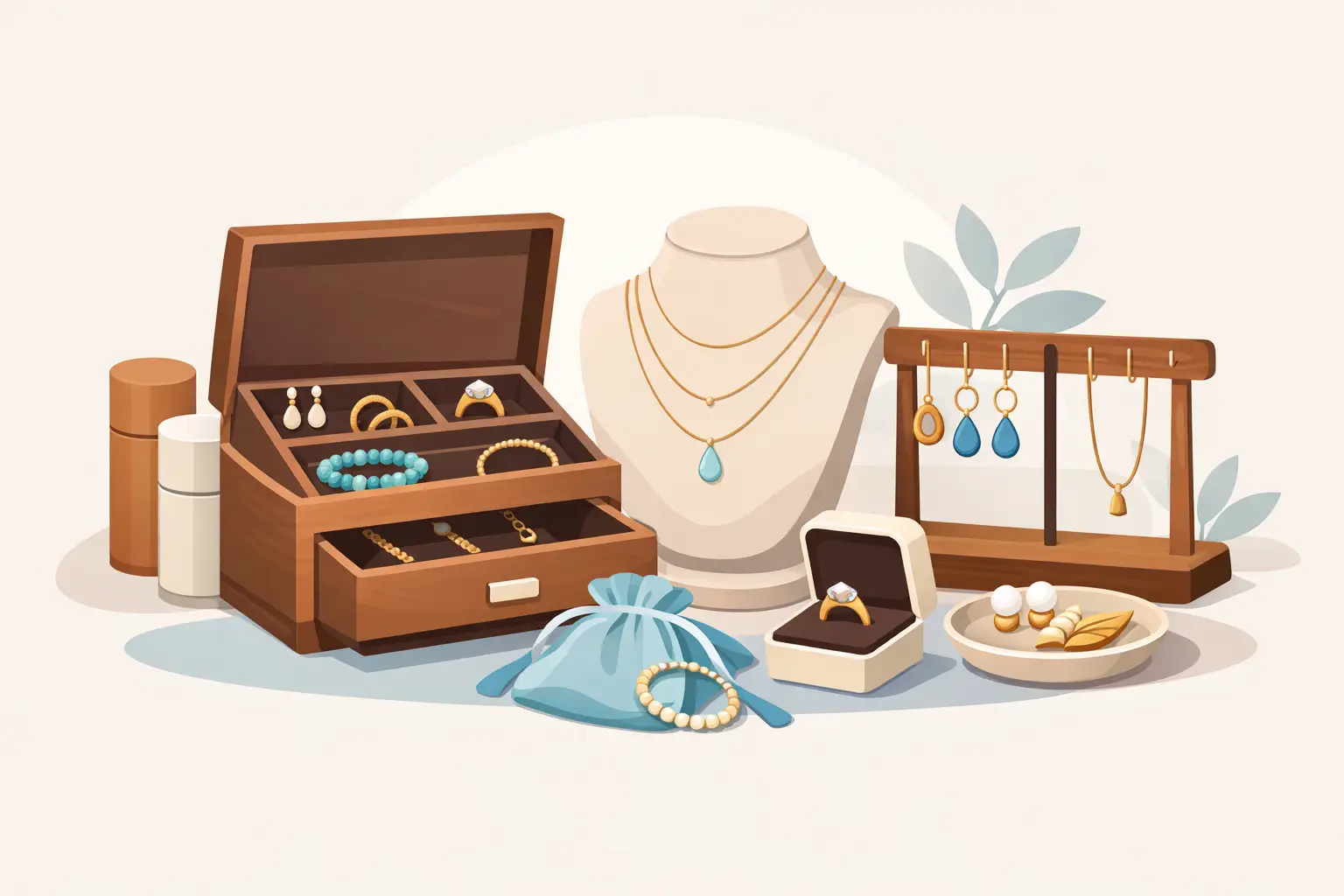
If you use a jewelry box, look for one with soft lining and divided compartments. Small sections are especially helpful for rings, dainty earrings, and beaded bracelets. Larger open compartments can work for statement pieces, but only if each item is laid in carefully and not stacked into a pile.
If you prefer open storage, a jewelry stand or wall organizer can be great for everyday access. Hanging necklaces keeps chains from knotting, and displaying earrings in pairs saves time when you are getting ready. The trade-off is that open-air storage exposes jewelry to dust, humidity, and sunlight more easily, so placement matters.
Keep your storage area in a cool, dry space away from direct sun. A bathroom may seem convenient, but steam and moisture can be rough on metals, adhesives, elastic, and finishes. A bedroom dresser, closet shelf, or vanity drawer usually works better.
The best way to store different handmade jewelry styles
Necklaces
Necklaces are usually the first pieces to turn into a tangled mess. Hanging them individually is often the simplest solution, especially for chains, layered styles, and long pendants. If you store them in a box, fasten the clasp first and lay each necklace in its own compartment.
For delicate handmade necklaces with wire wrapping, beading, or detailed pendants, avoid cramming several pieces into one section. Pressure can distort shapes over time. Soft pouches can help during travel, but for everyday storage, visibility and separation are usually better.
Earrings
Earrings tend to get lost or bent when they are dropped loosely into trays. Store pairs together whenever possible. Studs do well in small padded compartments, while dangle earrings should have enough vertical or flat space so hooks and decorative elements do not catch on each other.
Polymer clay earrings deserve a little extra care. They are lightweight and durable, but they can still scratch or warp if pressed under heavier jewelry or exposed to heat. Keep them flat or gently hanging, and avoid storing them near sunny windows or warm appliances.
Bracelets
Bracelets can often share a little more space than necklaces, but they still should not be packed tightly. Beaded bracelets can rub against metal cuffs, and stretch bracelets can weaken if they are pulled around bulky holders. A soft-lined compartment or a small tray works well for many styles.
If you use bracelet bars or stands, make sure the surface is smooth and clean. Rough materials can snag threads or dull polished finishes over time.
Jewelry sets and statement pieces
Matching sets are easiest to enjoy when they stay together. If you have handmade jewelry sets for gifting or special occasions, store each set in its own pouch, box section, or labeled compartment. This saves you from hunting down one earring five minutes before heading out.
Statement pieces need room. Big beads, oversized pendants, layered details, and boho textures all look beautiful because of their dimension, but that same dimension can get crushed in crowded storage. Give these pieces the biggest compartments you have, or store them separately in individual soft bags.
Materials matter more than most people think
Part of learning how to store handmade jewelry is paying attention to what each piece is made from. Different materials age differently, and the right storage can help them hold their color and shape longer.
Metal components may tarnish faster in humid environments. Beads can scratch if stored against harder surfaces. Natural stones can chip if they knock together repeatedly. Polymer clay can become misshapen in high heat. Leather, cord, and fabric details may not respond well to damp air or tight bending.
Mixed-media jewelry is especially common in handmade collections, which means one piece can include metal, clay, glass, thread, and resin all at once. In those cases, the safest choice is usually simple: store it somewhere dry, clean, padded, and separate from anything sharp or heavy.
Anti-tarnish strips can help if you have a lot of metal jewelry, but they are not magic. They work best when combined with low-moisture storage and pieces that are wiped clean before being put away.
Everyday habits that keep jewelry looking beautiful
Storage is only part of the story. How you put jewelry away matters too.
Try not to toss pieces onto a nightstand after wearing them. Take a moment to unclasp necklaces, pair earrings, and check for any makeup, lotion, or perfume residue before storing them. A soft dry cloth is often enough for a quick wipe-down.
It is also smart to rotate your jewelry instead of wearing the same few pieces nonstop without a break. Handmade jewelry is made to be enjoyed, but regular wear creates natural friction. Giving pieces a rest between wears can help preserve finishes, elastic, and delicate details.
If you have sentimental or seasonal pieces that you do not wear often, label their storage. This is especially helpful for holiday accessories, gift jewelry, or special event sets. When your collection grows, a little organization keeps beautiful pieces from being forgotten.
Travel storage counts too
Jewelry often gets damaged while traveling, not while sitting at home. If you are packing handmade pieces for a weekend away or a gift trip, choose a case with separate sections or use individual pouches. Wrap delicate items gently and avoid putting multiple necklaces in one pocket.
Try to pack only what you really plan to wear. Overpacking jewelry sounds harmless until chains knot, earrings lose backs, and your favorite bracelet gets scratched by a zipper. A smaller curated selection is usually safer and easier.
For artisan pieces with sculptural shapes or hand-applied details, hard-sided travel cases offer more protection than soft pouches alone. The extra structure can be worth it.
When to rethink your current storage setup
If you notice frequent tangles, missing earring backs, bent hooks, fading finishes, or pieces you forget you even own, your current system is probably not serving your jewelry well. Good storage should make your collection feel more usable, not more hidden.
You do not need an expensive setup to fix that. A drawer insert, a few soft pouches, a necklace stand, and a better storage location can completely change the way your jewelry wears over time. Thoughtful storage is less about perfection and more about respect for the handmade details that made you fall in love with a piece in the first place.
A beautiful collection deserves more than a catch-all dish. Give your handmade jewelry a home that protects its color, shape, and story, and it will keep bringing that little spark of confidence every time you put it on.