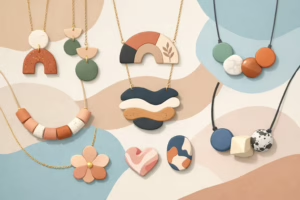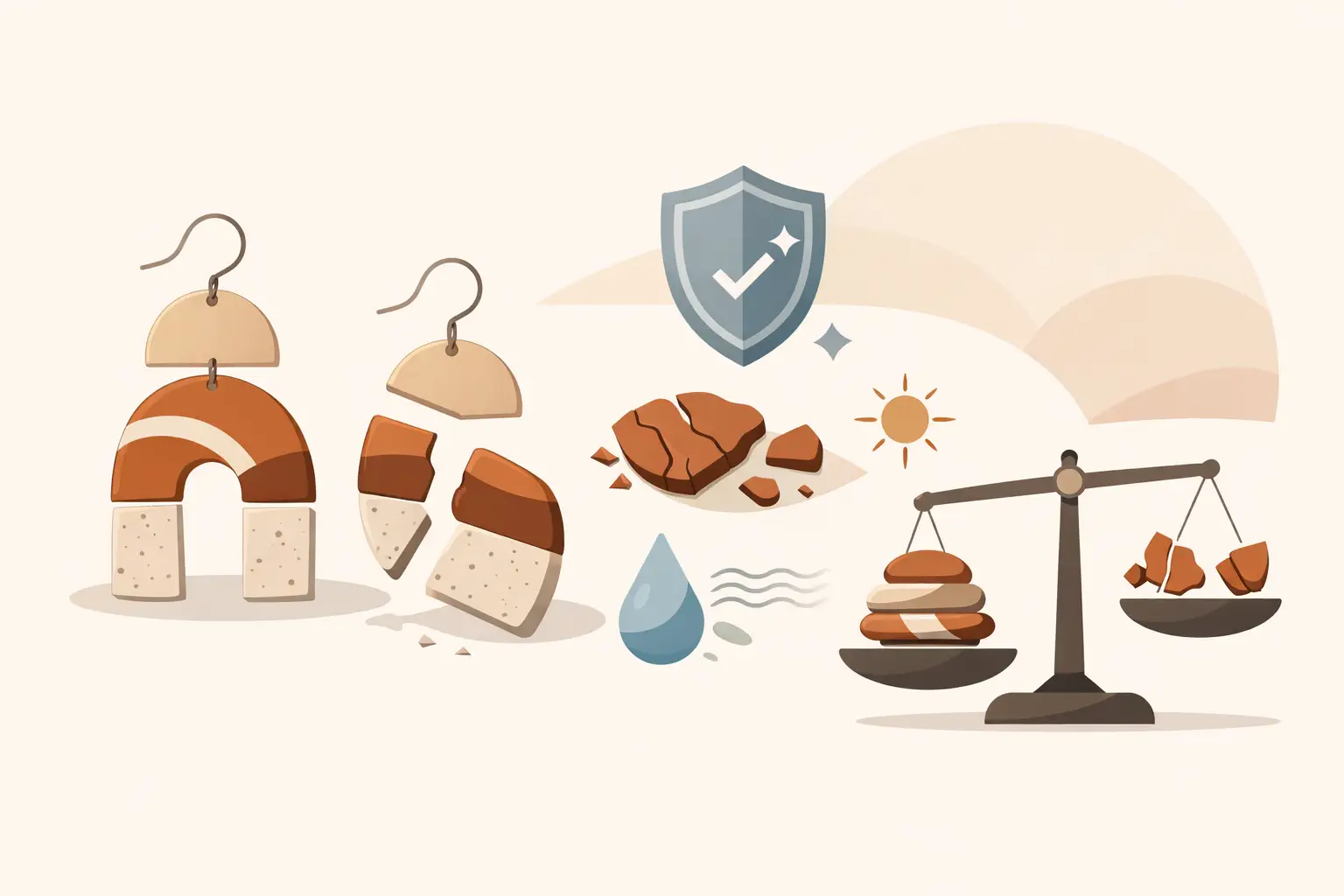
A favorite pair of clay earrings should feel like a little piece of wearable art, not something you have to be afraid to wear. So, can clay earrings break? Yes, they can – but a well-made pair of polymer clay earrings is more durable than many people expect. Their strength depends on the clay itself, how it was cured, the thickness of the design, and the way the earrings are handled after they come home with you.
Polymer clay is not the same as air-dry clay or pottery clay. Once properly baked, it has a slight flexibility that helps it hold up to normal wear. That makes it a wonderful material for colorful statement earrings, playful shapes, and artful details that feel personal. Still, handmade jewelry deserves a little thoughtful care, especially when a design includes delicate curves, narrow connectors, or layered pieces.
What Makes Clay Earrings Durable?
The biggest factor is proper curing. Polymer clay needs to be baked at the temperature and for the amount of time recommended by its manufacturer. Underbaked clay can feel firm at first but may snap, chip, or crack more easily over time. Properly cured clay develops the flexibility that makes polymer clay jewelry wearable and dependable.
Design also matters. A bold, solid arch or rounded stud generally has more strength than a very thin, oversized shape with a narrow point. This does not mean detailed earrings are fragile by definition. It simply means the maker has to balance beauty with structure. Thoughtful thickness, smooth edges, secure hardware, and carefully placed connection points all help a handmade pair last longer.
Quality findings make a difference, too. The clay portion may be perfectly strong, but an earring can still fail if a jump ring pulls open, a post becomes loose, or a hook bends. Handmade jewelry is a collection of small, intentional parts. When those parts are chosen and assembled with care, the finished piece is better prepared for everyday adventures.
When Can Clay Earrings Break?
Clay earrings are most likely to break when they are bent sharply, dropped on a hard surface, crushed under something heavy, or caught in clothing or hair. A thin clay piece can crack if it is forced past its natural flexibility. Posts, connectors, and dangling elements can also loosen if an earring is pulled rather than gently removed.
Accidents happen, of course. An earring that falls onto a carpet may be completely fine, while the same earring landing on tile or concrete could chip at an edge. Larger statement earrings have more surface area, so they can be more vulnerable if they are stepped on or stuffed loosely into the bottom of a crowded bag.
Heat and moisture deserve some attention as well. Polymer clay itself is not likely to dissolve if it gets splashed, but prolonged exposure to water can affect metal findings, glued components, and surface finishes. Leaving earrings in a hot car, on a sunny dashboard, or near a strong heat source is not ideal. Extreme heat can soften the material or affect its shape, especially if the earrings are pressed against another object.
Thin Designs Need a Gentle Touch
Those delightfully delicate styles – wispy leaves, narrow flowers, scalloped edges, and long abstract dangles – are often made to look light and airy. They may have a bit of flex, but they are not meant to be folded. Think of them as you would a favorite pair of fashion sunglasses: easy to enjoy often, but happiest when handled gently.
If you are choosing earrings for a busy day with toddlers, travel, workouts, or lots of layers and scarves, compact studs or medium-size dangles can be an especially practical choice. Save your largest, most intricate statement pair for a day when they can shine without being knocked around.
How to Wear Clay Earrings Without Worry
You do not need to keep polymer clay earrings in a jewelry box forever. They are made to bring color, confidence, and personality to your outfit. The goal is simply to make a few easy habits part of your routine.
Put earrings on after applying hairspray, perfume, makeup, and lotion. This helps keep residue off the clay and metal components. When changing clothes, especially sweaters or high-neck tops, remove your earrings first so they do not snag. At the end of the day, hold the finding rather than tugging on the clay shape when taking them off.
Avoid wearing them in the shower, pool, hot tub, or ocean. Chlorine, salt, sunscreen, and prolonged moisture are tough on many kinds of jewelry, not just clay pieces. It is also wise to take them off before sleeping. A pillow may seem harmless, but sleeping in earrings puts pressure on posts, hooks, and delicate dangles for hours.
Simple Care for Polymer Clay Earrings
A little care keeps handmade accessories looking bright and gift-worthy. If your earrings pick up makeup or everyday dust, wipe them gently with a soft, damp cloth. For a stubborn smudge, a small amount of mild soap and water on the cloth can work well. Do not soak the earrings, and dry them promptly.
For long-lasting color and shape, keep these four habits in mind:
- Store earrings flat or hang them separately so pieces do not rub, bend, or tangle together.
- Keep them away from direct sunlight, high heat, and humid spots like a steamy bathroom.
- Use a soft cloth or a jewelry tray instead of tossing them loose into a purse.
- Clean metal findings gently and avoid harsh cleaners, acetone, alcohol, or abrasive scrubbing.
A dedicated earring organizer is lovely, but it is not required. A small lidded box lined with a soft cloth works beautifully. If you travel, place each pair in a separate compartment or a tiny pouch so they cannot press against keys, cosmetics, or heavier jewelry.
What If an Earring Cracks or a Post Comes Loose?
A small break does not always mean the end of a beloved pair. If a metal post, hook, or jump ring has loosened, the repair may be fairly simple for a jewelry maker. Cracks and broken clay pieces are more complicated. Glue can sometimes hold a clean break for decorative, occasional wear, but it may not restore the original strength. A repaired earring should be treated more gently afterward.
If an earring arrives damaged or breaks unusually quickly during normal wear, reach out to the maker with a clear photo and a note about what happened. Small businesses that create handmade jewelry care deeply about their work and want customers to feel good wearing it. Every design is made by human hands, and a thoughtful conversation can help determine whether a repair or replacement is possible.
Are Clay Earrings More Fragile Than Other Earrings?
It depends on what you compare them to. Solid metal hoops can survive more rough treatment than most clay earrings. On the other hand, polymer clay is often lighter than metal, resin, glass, or stone, which makes it wonderfully comfortable for bold designs. A lightweight statement earring lets you wear joyful color and creative shapes without the heavy pull that can make your ears tired.
Glass is more likely to shatter when dropped. Natural stone can chip. Beaded jewelry can snag or lose a strand. Every material has its own strengths and its own care needs. The beauty of polymer clay is that it gives makers room to create expressive, lightweight designs with a durability that is very suitable for regular wear when properly cured and cared for.
At Scott Jewelry Design, handmade pieces are created to add a spark of artistry to real life, from casual coffee dates to celebrations and thoughtful gifts. Wear the pair that makes you feel most like yourself, then give it the same small kindness you would give any favorite accessory. A little care leaves plenty of room for color, compliments, and everyday joy.