A necklace can have the prettiest beads, the richest color, or the most meaningful pendant, but the clasp is what turns it into a piece you will actually reach for. The right necklace clasp types make getting dressed feel easy, keep your design secure, and support the personality of the jewelry instead of distracting from it.
For handmade jewelry lovers, clasps are more than a finishing detail. They affect comfort, durability, and the overall mood of a necklace. A tiny clasp may disappear beautifully into a delicate chain, while a bold toggle can become part of a boho statement all its own.
Necklace Clasp Types and When to Choose Them
There is no single best clasp for every necklace. The best choice depends on the necklace weight, the size of the beads, who will wear it, and whether the clasp is meant to blend in or be seen. These popular styles each bring something different to a handmade design.
Lobster Clasps
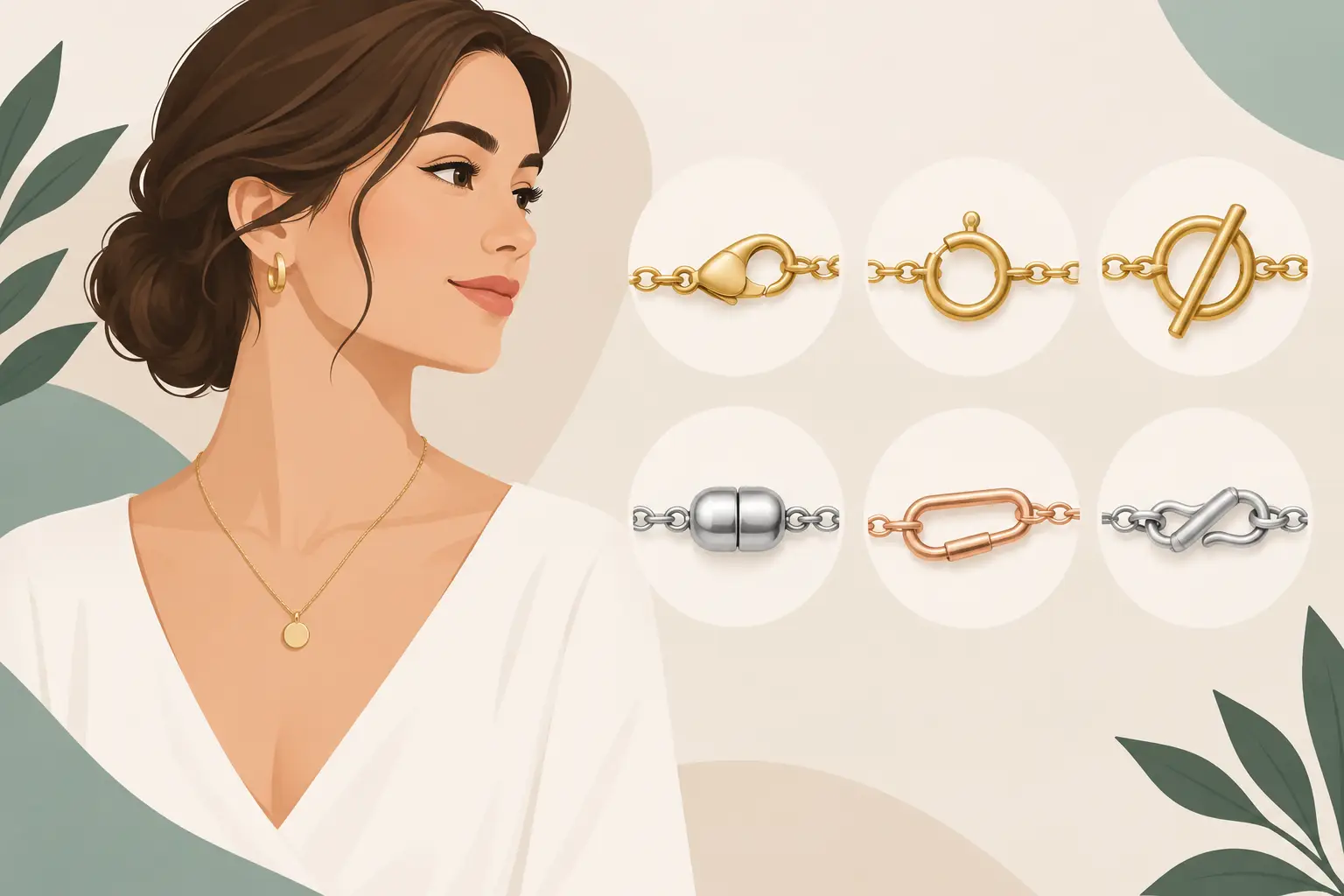
Lobster clasps are one of the most familiar options in jewelry, and for good reason. Their spring-loaded lever opens a small gate that clips onto a jump ring or extender chain. They are dependable, compact, and available in many finishes, from bright silver-tone to warm gold-tone and antique bronze.
This is a lovely choice for everyday necklaces with lightweight to medium-weight beads, pendants, or chains. A lobster clasp is secure without competing with a colorful focal bead or an expressive polymer clay pendant. The trade-off is that the small lever can be tricky for anyone with limited hand strength or long nails. Choosing a slightly larger lobster clasp can make a meaningful difference without making the design look bulky.
Spring Ring Clasps
A spring ring clasp is the classic small circle clasp often found on fine chains. Pulling back its tiny lever opens the ring, allowing it to attach to a jump ring. It has a neat, traditional appearance that works especially well when you want the clasp to stay in the background.
Spring rings suit delicate necklaces and simple pendant styles, but they are not always the most user-friendly option. The mechanism is small, which can make fastening it behind the neck feel frustrating. For a special necklace worn occasionally, that may be perfectly fine. For a piece intended to become an everyday favorite, a lobster clasp is often easier to manage.
Toggle Clasps
Toggle clasps bring a little drama in the best way. They have two pieces: a bar and a ring. The bar slips through the ring and rests across it to hold the necklace closed. Because toggles can be decorative, they are wonderful for artisan jewelry where every component deserves attention.
A floral toggle, hammered metal ring, or textured bar can complement earthy gemstone-inspired beads, mixed metals, and relaxed boho looks. They are also easier to fasten than many small clasps. Still, proportion matters. The bar needs to be long enough for the ring, and the necklace should not be too loose. If the ring is oversized or the necklace hangs heavily, the bar may slip back through during wear.
Magnetic Clasps
Magnetic clasps are all about convenience. Their two sides click together with a gentle pull, making them especially appealing for people who struggle with tiny clasps or want to put on a necklace without help. They can be round, tube-shaped, decorative, or almost invisible.
For lightweight necklaces, magnetic clasps can be a sweet and practical option. They are particularly helpful for gift jewelry, since easy wear adds an extra touch of thoughtfulness. However, magnet strength varies, and a magnetic clasp is not always ideal for a heavy statement necklace. A strong tug from a scarf, a curious child, or a busy day can separate the magnet. They should also be avoided by anyone with a pacemaker or another implanted medical device unless their medical professional says otherwise.
Barrel Clasps
Barrel clasps, sometimes called screw clasps, have two threaded ends that twist together. Once closed, they resemble a small metal barrel and create a clean, finished look. They are especially common on beaded strands because they sit neatly at the back of the neck.
These clasps can feel more secure than a simple magnetic closure, and they work nicely with classic pearl-style designs, gemstone strands, and necklaces with a polished, traditional feel. Their downside is speed. They take two hands and a little patience to line up and screw together. They are better for someone who values a tidy look and does not mind an extra moment while getting ready.
Hook and Eye Clasps
Hook and eye clasps are simple, artistic, and full of handmade charm. A curved hook catches through a loop, often with a little decorative detail worked into the metal. They can look rustic, modern, elegant, or whimsical depending on the shape and finish.
This clasp style feels at home in handmade necklaces with larger beads, leather accents, wire-wrapped details, or a relaxed bohemian spirit. It is easier to use than a tiny spring ring, but security depends on the hook shape and how the necklace moves. A deeper hook and a properly sized eye give the design a better hold. For a necklace that will be pulled on and off often, test the closure before calling it finished.
Box Clasps
Box clasps have a small tab that clicks into a decorative box. They are often used on multi-strand necklaces, vintage-inspired pieces, and designs that need a more substantial closure. Some include a safety latch for extra peace of mind.
Because they create a polished, balanced finish, box clasps are beautiful on dressier necklaces and wide beaded designs. They may be more detailed than a simple chain necklace needs, but they can turn the back of a statement piece into something just as special as the front.
Match the Clasp to the Necklace Weight
The clasp should be able to handle the weight and movement of the necklace. A delicate chain with a petite charm does not need a large industrial-looking closure. In fact, an oversized clasp can pull the necklace backward or look visually out of place. A small lobster clasp or spring ring usually feels more balanced.
A chunky strand of glass beads, natural stone, or layered components needs more support. Consider a larger lobster clasp, a sturdy toggle, or a box clasp designed for the job. The connecting rings matter, too. A strong clasp attached with weak jump rings is like a beautiful door with a loose hinge.
When creating a multi-strand necklace, think beyond strength. Each strand needs to lie smoothly, without twisting or crowding the clasp. A multi-strand box clasp or specially designed connector can keep the piece organized and comfortable against the neck.
Comfort Is Part of Beautiful Design
A clasp is usually worn at the back of the neck, where it can catch hair, scratch skin, or feel heavy if the wrong style is chosen. Smooth edges and good-quality components matter. If a necklace is intended for sensitive skin, choose materials thoughtfully and avoid rough plating that may wear quickly.
Placement can also change the experience. A decorative toggle can sit at the front or side of a necklace as part of the design, especially when you want to highlight an artisan-made component. A magnetic clasp may be hidden under a bead or incorporated into a focal section. There are no hard rules, only thoughtful choices that let the jewelry feel good as well as look beautiful.
Extender chains are another small detail with a big impact. They give the wearer room to adjust the necklace for different necklines and layering looks. Pairing an extender with a lobster clasp is a practical favorite for giftable necklaces, because it offers flexibility when you do not know the recipient’s preferred length.
A Few Care Tips for Longer-Lasting Clasps
Clasps last longer when they are treated gently. Fasten a necklace before storing it so it is less likely to tangle with other pieces. Keep it away from perfume, hairspray, lotion, and moisture when possible, since those can dull finishes and affect moving parts over time.
For lobster clasps and spring rings, avoid forcing the lever if it feels stuck. A gentle wipe with a soft, dry jewelry cloth can remove everyday residue. Check jump rings, crimp covers, and connection points occasionally, especially on necklaces that are worn often. Handmade jewelry is made to be enjoyed, and a little care helps preserve the details that make it personal.
The clasp may be small, but it carries a lot of responsibility. Choose one that fits the weight of your necklace, feels comfortable in your hands, and adds to the story your jewelry is telling. That thoughtful finishing touch can make a handmade piece feel even more like it was created just for you.