The difference between a pair of polymer clay earrings that feels polished and a pair that feels homemade in the frustrating way usually comes down to the supplies on your table. The right polymer clay jewelry making supplies do not need to be expensive or fancy, but they do need to work well together. When your clay, cutters, tools, and finishing materials are chosen with care, the creative process feels smoother and the finished jewelry looks more intentional.
If you are just getting started, it is easy to overbuy. Social media makes it seem like you need a studio full of gadgets before you can make something beautiful. You do not. A smaller, thoughtfully chosen setup will take you much farther than a crowded cart full of random tools you never touch.
The polymer clay jewelry making supplies that matter most
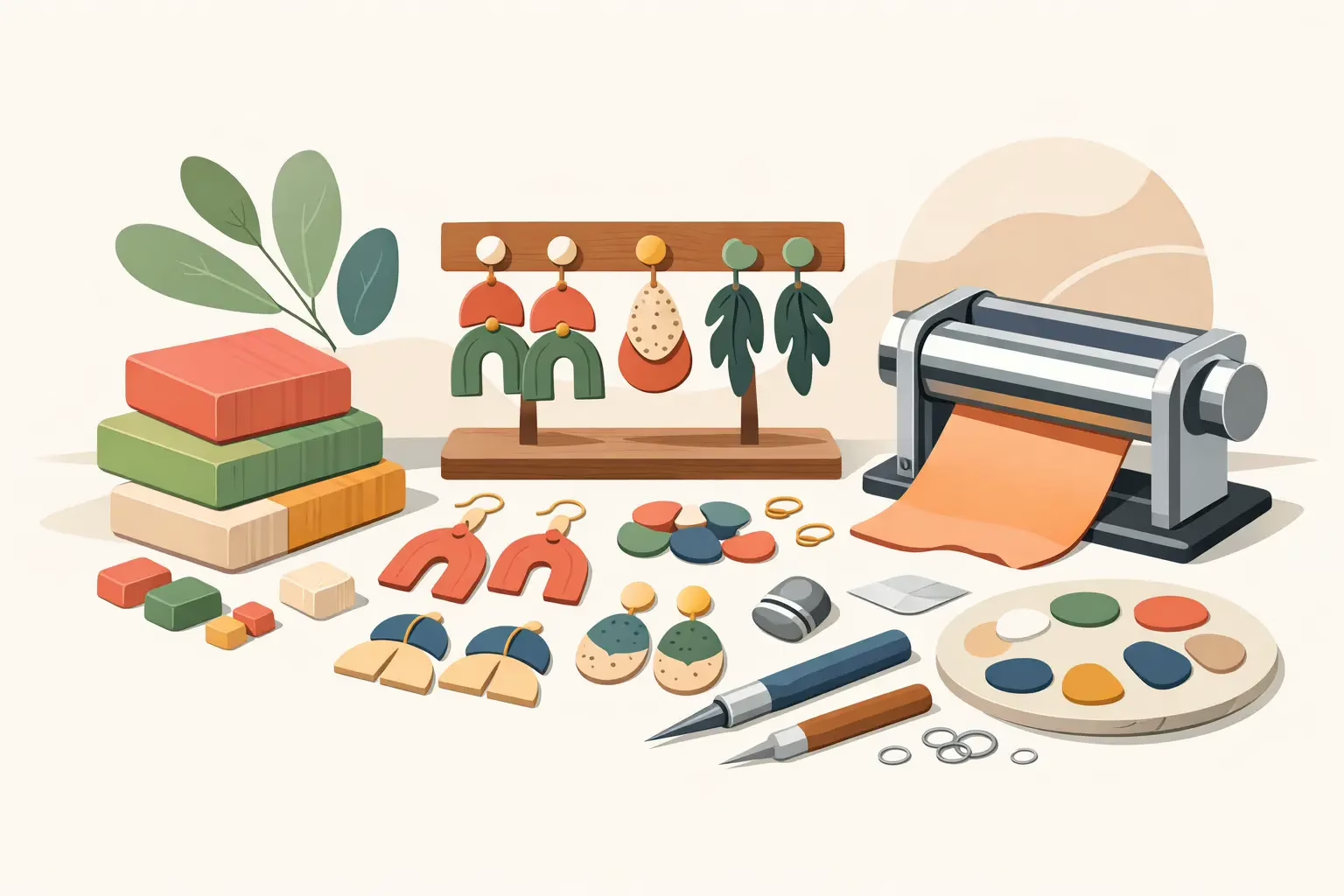
At the center of your supply list is the clay itself. Not all polymer clay brands behave the same way, and that matters more than beginners often realize. Some are softer straight out of the package, which can be helpful if your hands tire easily or if you want to blend colors without much effort. Others are firmer and hold crisp edges better, which is useful for detailed designs, clean cutter lines, and patterns that need structure.
For jewelry, many makers prefer clays that are strong after baking rather than just easy to shape before it goes in the oven. That trade-off matters. A very soft clay can feel friendly at first, but if it becomes brittle after curing, your earrings may not hold up the way you want. If you plan to make thin dangles, layered statement pieces, or pieces with delicate cutouts, strength after baking should stay high on your priority list.
Acrylic rollers or brayers are another staple. You need something smooth and nonporous to condition and flatten clay evenly. A pasta machine is also popular, especially once you start making jewelry regularly, because it speeds up conditioning and helps create consistent sheet thickness. That said, it is not a must-have on day one. If your budget is limited, a roller can absolutely get you started.
Your work surface matters too. A ceramic tile, a smooth glass mat, or a dedicated nonstick craft surface helps keep your clay clean and your shapes even. Polymer clay attracts lint, dust, and little fibers like it was made for that job, so a clean workspace is not just a nice extra. It is part of the design process.
Cutters, blades, and shaping tools
Once your clay is conditioned, the tools that shape it make a big difference in how professional your jewelry looks. Shape cutters are often the first thing people buy, and for good reason. Clean circles, arches, teardrops, and geometric forms are the backbone of many modern earring designs. Sharp cutters save time and reduce the need for constant edge cleanup.
Still, cutters are not the whole story. Flexible blades and tissue blades are essential for straight cuts, trimming slabs, and lifting clay from your work surface. A dull blade can drag the clay and distort your design, so this is one area where quality pays off quickly.
Ball tools, needle tools, and silicone-tipped sculpting tools also earn their place. They help with texture, gentle shaping, smoothing seams, and adding small details without leaving heavy fingerprints behind. If you love organic or boho styles, hand-shaped details can be just as important as cutter-made symmetry.
That is one of the fun truths about polymer clay jewelry. Your supply choices should support your style. If you love crisp, minimal shapes, invest more in cutters and precision blades. If you lean toward floral, earthy, or freeform pieces, texture tools and sculpting tools may matter more.
Baking supplies are part of the finish
A lot of frustration with polymer clay jewelry starts in the oven. Beautiful clay can turn into scorched, brittle, or underbaked pieces if the baking setup is off. An oven thermometer is one of the smartest supplies you can buy because many ovens run hotter or cooler than the number on the dial suggests.
A dedicated baking tray, parchment paper, and ceramic tiles help create a more stable baking environment. Some makers tent their pieces loosely with foil to prevent browning, especially with lighter colors. Others prefer covered baking methods for more even heat. It depends on your oven and the brands of clay you use.
The important part is consistency. Polymer clay jewelry needs proper curing for strength. If your earrings snap too easily, the issue is often underbaking rather than bad design. Following package directions matters, but real-world testing matters too. Every setup has its quirks.
Sanding, drilling, and assembly supplies
This is where handmade pieces start looking boutique rather than beginner. Sandpaper in a range of grits, micro-mesh pads, or small rotary tools can help smooth rough edges and refine the surface after baking. Not every style needs a glass-smooth finish, but almost every style benefits from clean edges.
A small hand drill or pin vise is useful for making holes after baking if you want more control over placement. Some makers punch holes before baking, which works well for simple designs. Others prefer to drill later, especially for layered pieces or detailed shapes where alignment really matters.
Then comes assembly. Jump rings, earring posts, hooks, necklace chains, clasps, and pliers all belong on your supply list if you plan to turn your clay pieces into wearable jewelry. It is worth paying attention to metal quality here. Cheap findings can tarnish quickly, irritate sensitive ears, or make a beautiful handmade piece feel less special. Hypoallergenic and tarnish-resistant options are often worth the extra cost.
Adhesive also matters, but it is not magic. Strong jewelry glue can help secure posts and certain components, yet mechanical holds are often more reliable when possible. For example, embedding hardware into the clay design or using well-planned attachment points can improve long-term wear.
Optional polymer clay jewelry making supplies that are actually useful
Once the basics are covered, the extras become more personal. Texture sheets, stamps, mica powders, alcohol inks, gold leaf, silk screens, and resin can all add beauty and personality. These supplies are exciting, but they are best added slowly.
The reason is simple. It is easier to build a style when you know what you truly enjoy making. If you buy every trend-driven material at once, your supply drawer gets crowded before your point of view gets clear. A better approach is to make a few collections, notice what colors and finishes feel most like you, and then add specialty supplies that support that direction.
For example, if you love soft neutrals and botanical designs, texture mats and subtle pigments may serve you better than a stack of bright foil flakes. If bold statement earrings are your thing, metallic accents, layered cutters, and high-contrast color palettes may deserve more of your budget.
How to shop smarter without losing the joy
A good supply collection grows with your skill level. That means your first goal is not owning everything. It is removing friction from the making process. Buy the supplies that solve a real problem, such as clay that cracks, cutters that warp shapes, or findings that do not feel secure.
It also helps to think in terms of projects, not just products. Instead of shopping for polymer clay jewelry making supplies in the abstract, plan around what you want to create. A pair of lightweight arch earrings, a playful charm necklace, or a layered boho statement piece will each call for slightly different tools and findings.
Keeping your supplies organized makes a bigger difference than many people expect. Polymer clay rewards calm, clean workflows. Separate your cutters, findings, sanding tools, and color palettes in a way that makes sense to you. When your table feels inviting instead of chaotic, creativity comes easier.
And if you sell your jewelry or hope to one day, consistency should shape your buying decisions. Supplies that help you repeat a successful design with reliable results are often more valuable than novelty tools you use once. That is part of handmade growth too – learning which materials support both your creativity and your standards.
At Scott Jewelry Design, that maker mindset is part of what makes handmade jewelry feel so meaningful. There is care behind every detail, from the shape of a clay piece to the quality of the findings that finish it.
The best supply list is not the longest one. It is the one that helps you sit down, feel inspired, and make jewelry that looks like your own kind of art. Start with the essentials, upgrade with intention, and let your tools grow alongside your style.