Long before the world became captivated by the brilliance of carbon-based diamonds, there was a stone that ruled the ancient world with a different kind of fire: a metallic, gunmetal-grey luster that seemed to bridge the gap between the terrestrial and the divine. Known as the “Hematite” or the “Black Diamond of Antiquity” (2) is an iron oxide mineral (𝐹𝑒2𝑂3) that has served humanity for over 40,000 years. (3)
Today, this ancient stone is experiencing a significant resurgence in high-end and contemporary jewelry. From the minimalist runways of 2026 to the spiritual collections of modern lithotherapists, it is reclaiming its throne as a versatile, powerful, and strikingly beautiful gemstone.
A Legacy Written in Blood and Iron
The word finds its roots in the Greek word haema, meaning “blood” (4). This etymological link is not due to its surface appearance—which is famously a shimmering metallic silver or black—but because of its internal secret. When ground into a powder or rubbed against unglazed porcelain, it leaves a vivid, rust-red streak (5).
The Stone of Warriors and Goddesses
In antiquity, this “blood-red” property made it a sacred symbol of protection and vitality:
- Ancient Egypt: It was hailed as the “stone of Isis,” believed to protect the soul on its journey through the afterlife (6). Egyptians frequently placed hematite amulets in the tombs of pharaohs to ward off evil spirits (7).
- Ancient Rome: Roman warriors believed the stone was “petrified blood” found on battlefields Kenkengems. They would paint their bodies with powdered hematite to ensure strength and invincibility in combat (8).
- Native American Traditions: Tribes used red ochre (earthy hematite) for war paint and sacred pictographs, believing it provided a spiritual connection to the Earth (9).
The Victorian Era: Mourning and Elegance
During the mid-Victorian period, it became a staple of mourning jewelry (10). Following the death of Prince Albert, Queen Victoria’s preference for somber, dark tones popularized it as a more lustrous alternative to jet (11). It was frequently carved into intricate cameos and intaglios, a tradition that continues to influence modern vintage-inspired designs Lang Antiques.
The Science of the “Metallic” Gem
Hematite stands out in the gemological world due to its high density and unique optical properties.
| Property | Value/Description |
|---|---|
| Chemical Formula | 𝐹𝑒2𝑂3 (Iron Oxide) |
| Mohs Hardness | 5.5 to 6.5 (12) |
| Luster | Metallic to splendent |
| Color | Steel-grey, black, or reddish-brown (13) |
| Streak | Distinctive cherry red |
| Density | 5.26 g/cm³ (High “heft”) (14) |
One common misconception is that all is magnetic. In reality, natural is not magnetic (or only very weakly so) GemSelect. Most magnetic “jewelry” sold in gift shops is actually a synthetic material known as hematine or hemalyke (15).

Why the Modern Resurgence?
The comeback in the mid-2020s is driven by three main factors: its versatility in modern fashion, its deep-rooted metaphysical appeal, and its role in the “quiet luxury” movement.
1. The Aesthetic of “Gunmetal Glamour”
In the 2026 fashion landscape, there is a clear trend toward mixed-metal layering and sculptural, textured jewelry (16). Hematite’s neutral gunmetal tone makes it the perfect anchor for stacking with yellow gold, silver, and platinum.
- Men’s Fashion: Hematite is a top choice for men’s accessories like cufflinks and watch bezels due to its masculine, “industrial” sheen.
- High Fashion: Designers like Cartier and Bulgari have utilized faceted hematite in high-jewelry bracelets and demi-parures, elevating the stone from “costume” status to fine jewelry.
2. The Metaphysical Anchor
As the world becomes increasingly digital, there is a growing demand for “grounding” stones. Hematite is the premier Root Chakra stone (17). It is sought after for its perceived ability to:
- Absorb Negativity: It is believed to act as a protective shield, dissolving negative energy and promoting emotional stability (18).
- Enhance Focus: Often called a “mind cleanser,” it is used to improve concentration in hectic work environments (19).
3. Sustainability and Value
19)In an era where sustainability is a core jewelry trend (20), hematite shines as an ethical choice. It is abundant, easily sourced, and requires less invasive mining compared to traditional precious gemstones (21). Furthermore, its affordability allows designers to create bold, oversized statement pieces without the astronomical price tag of diamonds (22).

Caring for Your Hematite
Because hematite is relatively brittle and sensitive to chemicals, it requires specific care:
- Avoid Water: Iron oxide can rust or lose its luster if exposed to moisture for long periods Tiny Rituals.
- Setting Matters: Choose bezel settings for rings to protect the edges from chipping Ouros Jewels.
- Cleaning: Use a soft, dry cloth. Avoid ultrasonic cleaners or harsh chemicals (23).
Whether you are drawn to its rich history as a warrior’s talisman or its sleek, modern aesthetic, it remains a testament to the enduring power of the Earth’s most fundamental elements. In the “Black Diamond of Antiquity,” we find a rare combination of prehistoric strength and contemporary cool—a stone that is, quite literally, grounded in the past but perfectly polished for the future.
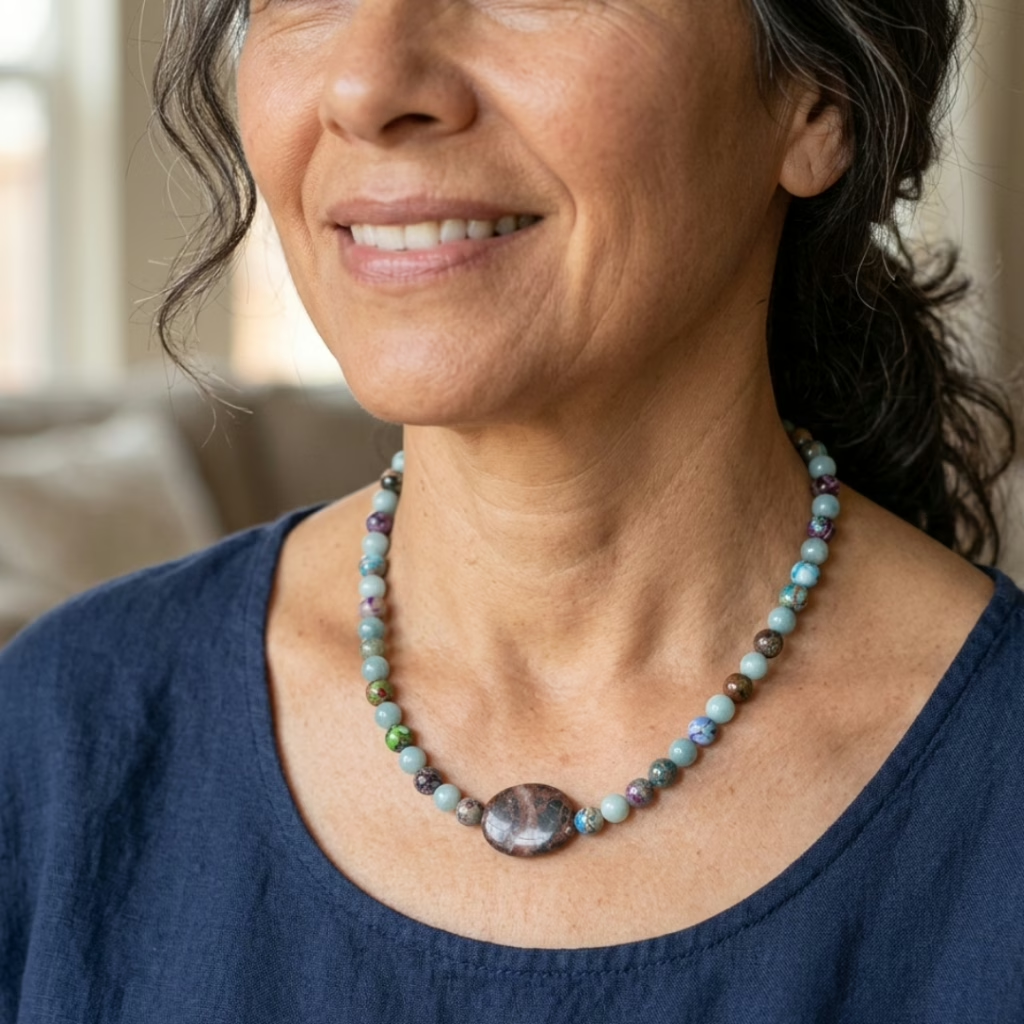
Hematite And Jasper Necklace
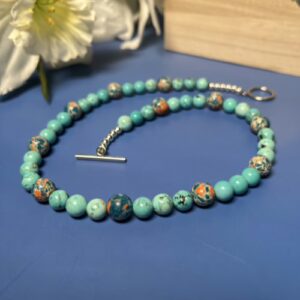
This Hematite And Jasper Necklace is composed of Natural Rainbow Hematite Beads, Red Blue Sea Sediment Jasper Beads, Colorful Sea Sediment Jasper Beads, Flat Oval Shaped Tiger Eye Beads and silver plated components including a toggle clasp.
1 in stock
Sources
- A.T. Storrs Ltd
- Jeweller Magazine
- YouTube – Ancient History of the Mineral Hematite
- Antique Jewelry University
- Mindat.org
- Kenkengems
- Infinite Warrior
- Dakata Stones
- France Perles
- GIA
- Sotheby’s
- IGI
- Wikipedia
- GemSelect
- Ouros Jewels
- Artizan Joyeria
- Gypsy Gems Jewelry Box
- Beads of Cambay
- Beads Finding Depot
- J. Pratt Design
- Vedantu
- JewelsForMe
- Belk