A beautiful pair of earrings should not become the first thing you want to take off. Whether you reach for tiny everyday studs, colorful clay dangles, or a statement pair that makes a simple outfit feel special, the backing does more than hold an earring in place. This guide to earring backings will help you choose a style that suits your earrings, your comfort, and the way you actually wear jewelry.
The right backing is one of those small handmade details that can make a big difference. It affects how securely an earring sits, how much weight your earlobe carries, and whether you can move through a busy day without checking the mirror every hour.
Guide to Earring Backings: Start With How You Wear Them
There is no single best earring backing for every person or every design. A delicate post earring has different needs than a bold beaded drop, and a favorite pair you wear to work may call for more convenience than a pair reserved for date night.
Before choosing a backing, think about three things: the earring’s weight, the thickness and length of its post, and your own sensitivity to metal. A backing that feels perfect on a lightweight stud can feel too loose or too small on a larger statement earring. Likewise, a very secure backing may be worth the extra effort if you tend to lose earrings or wear them while traveling.
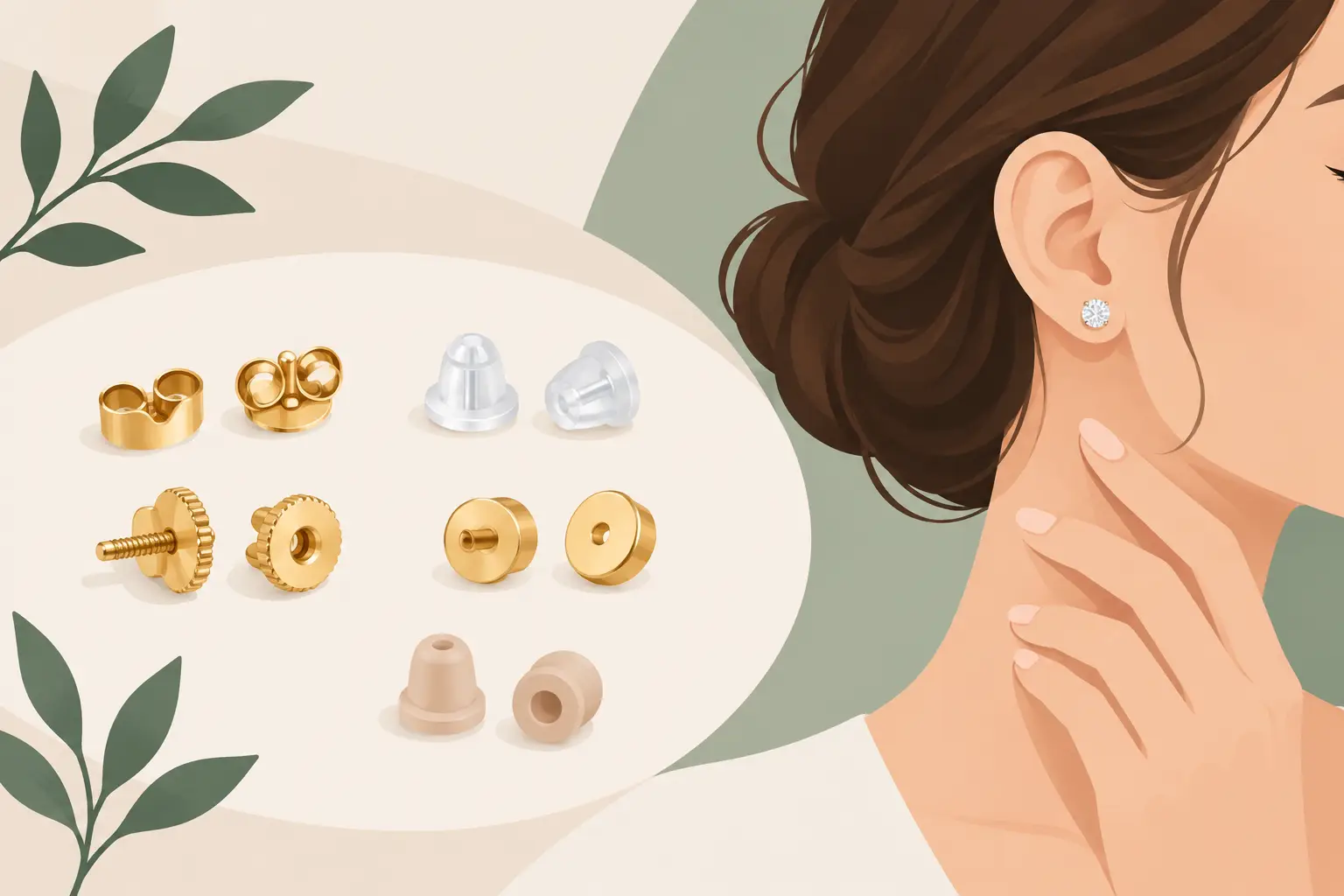
Butterfly or friction backs
Butterfly backs, also called friction backs or push backs, are the familiar choice for post earrings. They slide onto the post and stay in place through gentle pressure. Simple, lightweight, and easy to use, they are especially common on studs, small drops, and many handmade designs.
Their biggest strength is everyday ease. You can put them on quickly, they do not add much bulk behind the ear, and they work well with earrings that are not especially heavy. For many people, they are the most comfortable option for a full day of wear.
The trade-off is that friction backs can loosen over time. If the little curled edges no longer grip the post firmly, the backing may slide too easily. A gently tightened backing or a replacement pair can restore a better fit. It is also wise to check that both backs are secure before heading out, especially with earrings that have sentimental value.
Rubber or silicone backs
Soft rubber or silicone backs are small, flexible, and wonderfully practical. They are a favorite for lightweight earrings, fishhook ear wires, and casual designs because they are comfortable and easy to tuck into a jewelry pouch. Clear silicone backs also keep the focus on a colorful bead, a polymer clay shape, or a special metal finish.
For hook earrings, these little stoppers are more about peace of mind than weight support. Slip one onto the back end of the ear wire after putting the earring on, and it can help prevent the hook from working its way out when you are pulling on a sweater, hugging someone, or moving your hair.
Silicone backs are not always the best choice for very heavy earrings or precious pieces you cannot risk losing. They can stretch, collect lint, or become less snug after repeated wear. Keep a few fresh pairs on hand, and replace them when they no longer feel secure.
Locking backs
Locking backs are designed for shoppers who want an extra layer of security. These backs usually click, lock, or release through a small mechanism rather than relying only on friction. They are a thoughtful option for valuable earrings, active days, travel, or anyone who has lost one too many beloved studs.
Because locking backs vary by design, compatibility matters. Some are made for specific post widths or post notches, so they may not fit every earring in your collection. They also tend to be larger and can feel more noticeable behind the ear than a standard butterfly back.
If security is your top priority, they are worth considering. Just do not force a locking back onto a post that does not seem made for it. Jewelry should feel secure, never strained.
Screw backs
Screw backs twist onto threaded posts, creating a very secure hold. They are often used for fine jewelry, baby earrings, and earrings that are likely to stay in for long periods. Once properly fastened, they are far less likely to slip off by accident.
That security comes with a slower routine. Screw backs take more time to put on and remove, and tiny threads can be tricky if you have long nails or are getting ready in a hurry. They also require matching threaded posts, so you cannot simply use them as an upgrade for every pair of earrings.
For an heirloom-style piece or a small, meaningful everyday stud, screw backs can be a lovely choice. For changing up a colorful earring collection often, a simpler backing may feel more joyful and practical.
Lever backs, latch backs, and hinged closures
Not all earrings rely on separate backs. Lever backs have a hinged lever that closes behind the ear, while latch backs and similar hoop closures click into place as part of the earring itself. These styles create a clean look and remove the chance of misplacing a tiny backing at the bottom of your jewelry box.
They work beautifully for dangles and hoops because the closure can help distribute the design’s weight more naturally. A well-made lever back can feel especially secure for a medium-weight earring, with enough movement to let a beaded or artistic drop catch the light.
As with any moving part, check hinges and latches occasionally. If a closure begins to feel loose, do not keep wearing it as usual and hope for the best. A small adjustment or repair is much easier than replacing a lost earring.
French hooks and ear wires
French hooks are the graceful curved wires often used for boho earrings, beaded drops, and handmade statement pieces. They are easy to put on and allow an earring to move freely, which is part of their charm. They can make a design feel light, expressive, and effortless.
The open end is their main consideration. Some people wear French hooks without any added stopper, while others prefer a silicone back for extra reassurance. If your earrings are long, lightweight, or likely to catch on scarves and hair, a stopper is a simple little safeguard.
For many handmade styles, French hooks are a natural fit because they give the design room to shine. Choose ear wires that feel smooth, balanced, and comfortable, especially if you plan to wear the earrings for several hours.
Comfort Matters as Much as Security
An earring backing should never pinch your earlobe, press painfully into your skin, or make you dread wearing a pair you love. If it does, the issue might be the backing, the earring’s weight, or an irritation caused by the metal itself.
For sensitive ears, pay attention to the materials touching your skin, including both the post and the backing. Options such as surgical steel, titanium, sterling silver, gold-filled materials, and quality hypoallergenic components may be more comfortable for some wearers. Sensitivity is personal, though, so what works beautifully for one person may not be ideal for another.
Heavy earrings deserve a little extra thought. Larger backs, often called comfort backs or disc backs, can provide more surface area against the earlobe. This may help a heavier post earring sit more upright instead of tipping forward. They cannot make an extremely heavy pair weightless, but they can improve the way a moderate statement earring feels and looks.
If an earring pulls noticeably, save it for shorter wear or choose a lighter design for all-day plans. The most stylish pair is still the pair you feel good wearing.
How to Keep Earring Backings Clean and Reliable
Because backings sit close to the skin, they can collect product residue, natural oils, and dust. A quick cleaning habit keeps them more comfortable and helps you spot wear before a backing lets you down.
For most fashion and handmade earrings, gently wipe posts and backs with a soft, dry cloth after wearing. If the materials can safely handle it, use mild soap and water, then dry every piece completely before storing it. Avoid soaking polymer clay earrings, plated components, or mixed-material designs unless you know they are made for it.
Store extra backs together in a small container so they are easy to find. It is also helpful to keep a few silicone stoppers and replacement butterfly backs in your travel pouch. They take up almost no space and can rescue an earring moment when one small piece goes missing.
When should you replace a backing?
Replace a backing when it slides on without resistance, feels bent, has discolored beyond cleaning, or no longer closes properly. Silicone backs should be replaced when they stretch or lose their grip. For hinged and locking styles, watch for a closure that no longer clicks firmly into place.
A replacement backing is a small investment in earrings you already love. It can also be a wonderful way to make an older pair feel wearable again.
The best backing is the one that lets you forget about it while your earrings do what they were made to do: add color, confidence, and a little piece of art to your day. Give your favorite pairs a quick check before you wear them, choose comfort without apology, and let your personal style move with you.