A bead can turn a simple length of string into something that feels completely your own. The best beads for beginners are not necessarily the most expensive, rarest, or shiniest ones. They are the beads that feel good in your hands, work with your chosen cord or wire, and leave room for play while you build confidence.
When you are new to jewelry making, a project should feel joyful, not like a tiny engineering challenge. Start with materials that are forgiving, easy to see, and fun to combine. You can always move into more detailed designs later. For now, the goal is to make something colorful, personal, and wearable enough to make you smile every time you put it on.
What Makes a Bead Beginner-Friendly?
The easiest beads to work with have holes large enough for standard elastic cord, beading wire, or simple stringing material. They are fairly consistent in size, comfortable to hold, and not so fragile that one little drop ruins your afternoon.
A bead’s shape matters, too. Round beads are the friendliest place to begin because they sit naturally beside one another and create an easy rhythm. Larger beads are also simpler to pick up, arrange, and thread than tiny seed beads. That does not mean small beads are off-limits, but they ask for more patience, a steadier hand, and often a needle.
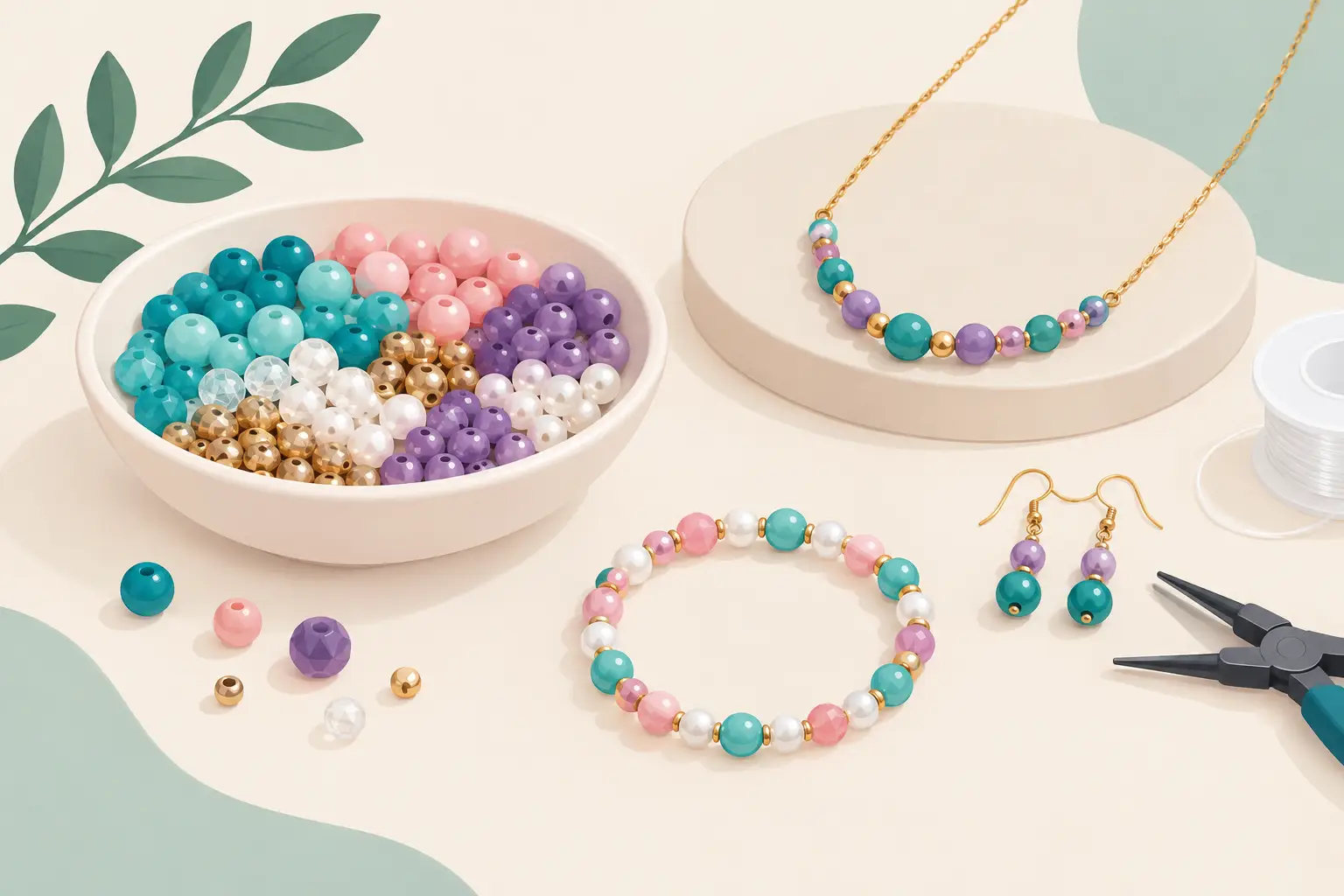
Color is part of the learning experience. A small mix of colors helps you understand balance and pattern without requiring complicated techniques. Try a palette of three or four colors rather than grabbing every shade at once. A warm mix of coral, cream, gold, and turquoise has a sunny boho feel, while black, white, and one bright accent color can look crisp and modern.
The Best Beads for Beginners, by Material
Acrylic beads: colorful, lightweight, and carefree
Acrylic beads are a lovely first choice because they are lightweight, affordable, and available in nearly every color, shape, and finish you can imagine. Think cheerful hearts, translucent rounds, candy-colored flowers, faceted gems, and bold geometric styles. They make easy bracelets, playful necklaces, and bright earrings without adding much weight.
They are especially useful when you want to experiment. You can test color combinations and patterns freely without worrying about using up a precious material. Acrylic does not carry the same natural depth as stone or glass, but that is part of its charm: it is happy, expressive, and unafraid of color.
Glass beads: a little sparkle with lots of personality
Glass beads are a beautiful next step for beginners who want their jewelry to catch the light. Smooth rounds, faceted beads, and simple glass pearls are all easy options for stringing projects. Glass can make a handmade piece feel polished while still leaving plenty of room for a relaxed, artistic design.
Choose medium-size glass beads, around 6 to 10 millimeters, for your first few projects. They are large enough to handle but not so large that a bracelet feels bulky. Keep in mind that glass is heavier than acrylic and can chip if dropped on a hard floor. For earrings, use glass as an accent rather than filling the whole design with it, especially if you prefer lightweight jewelry.
Wood beads: warm, earthy, and easy to style
Wood beads bring instant natural texture to a project. They are light, easy to string, and especially fitting for boho bracelets, long necklaces, and relaxed summer accessories. Their soft, earthy look pairs beautifully with tassels, clay charms, shell-inspired details, or a few bright painted beads.
Natural wood varies in grain and tone, which means every piece has a little individuality. If you love a more colorful look, painted wood beads offer the same light feel with a brighter personality. Just avoid soaking finished wood jewelry in water, since moisture can affect the surface over time.
Polymer clay beads: handmade character in every shape
Polymer clay beads are ideal for makers who want their jewelry to feel artistic from the start. They can be smooth, marbled, speckled, striped, floral, or shaped into cheerful little fruit, stars, and hearts. Because they are lightweight, they work especially well in statement earrings and colorful bracelets.
Pre-made clay beads let you focus on design and assembly, while making your own gives you a hands-on creative project. If you choose to create clay beads yourself, keep your early shapes simple. Rounds, discs, and flat heishi-style beads are easier to pierce and bake evenly than detailed mini sculptures.
Natural stone beads: meaningful and beautifully imperfect
Natural stone beads have rich color, subtle variations, and a grounded feel that many jewelry lovers adore. Jasper, quartz, agate, and howlite are approachable choices for beginner stringing projects. A simple bracelet made with natural stone rounds and a few gold-tone spacer beads can look thoughtful and gift-worthy without being difficult to make.
The trade-off is that stone is heavier and often costs more than acrylic or wood. It can also vary in hole size, color, and shape. That variation is not a flaw. It is part of what makes a handmade design feel special. Use stone as the focal point in a project, then balance it with lighter materials if you are making earrings or a long necklace.
Start With the Right Size and Shape
If you are unsure where to begin, 6 mm and 8 mm round beads are a sweet spot. They are versatile enough for bracelets and necklaces, easy to grip, and large enough for many kinds of stringing materials. A mix of 8 mm focal beads and smaller 4 mm or 6 mm accents creates a pleasing pattern without becoming overly complicated.
For bracelets, look for hole sizes that work with your elastic cord. Stretch cord is popular for first projects because it does not require clasps, but the bead holes must be wide enough to pass the cord through. For necklaces and earrings, beading wire or head pins may be a better fit. Before committing to a whole design, thread a few sample beads onto your chosen material. That quick test can save frustration later.
Round beads are the easiest, but do not be afraid of a few simple shapes. Flat disc beads create a fun stacked look. Cube beads add a modern edge. Oval beads feel soft and elegant. The trick is to use one main shape and one accent shape rather than mixing too many competing forms in your first design.
A Simple Way to Build Your First Color Palette
A beautiful bead mix does not have to be complicated. Choose one color you love, one neutral, and one supporting shade. For example, try lavender, cream, and soft gold; turquoise, tan, and coral; or olive green, ivory, and warm brown. From there, add one special detail, such as a metallic spacer bead, a small charm, or a textured focal bead.
Lay the beads out before you string them. This small pause lets you see whether one color is taking over or whether a certain bead needs to move closer to the center. Symmetry is an easy starting point for bracelets, but it is not a rule. An off-center focal bead or a playful uneven color pattern can feel more handmade and more like you.
Skip These Beads for Your Very First Project
Tiny seed beads can create gorgeous woven designs, but they are not always the easiest place to start. They require fine thread, small needles, and a bit more precision. Save them for when you are ready to explore bead weaving, fringe earrings, or intricate patterns.
Very heavy beads, extremely delicate beads, and unusually shaped beads can also be challenging at first. Heavy pieces may stretch elastic cord or make earrings uncomfortable. Irregular holes can make stringing frustrating. There is no need to avoid them forever, but learning with forgiving materials gives you a better chance of finishing with a piece you are excited to wear.
Let Your First Pieces Be Personal
Your first bracelet does not need to look like it came from a factory. In fact, the tiny choices that make it yours are the whole point. Maybe you choose colors that remind you of a favorite vacation, a stone that feels meaningful, or a charm that makes a friend laugh. Handmade jewelry carries those stories with it.
At Scott Jewelry Design, we believe accessories should feel like small pieces of self-expression, whether you are wearing a bright pair of earrings or giving a handmade bracelet to someone you love. Begin with beads that invite you to play, make room for happy little imperfections, and let your next design show a little more of who you are.