


Chunky Turquoise Chip Necklaces
$38.00
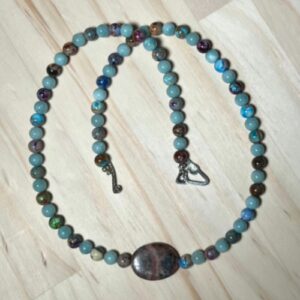
These Chunky Turquoise Chip Necklaces are composed of Natural and Synthetic Blue Turquoise Irregular Shaped Beads and gold-plated spacer beads and toggle clasps
Description
Dive into the beauty of nature with our Chunky Turquoise Chip Necklaces! Each piece is a stunning blend of Natural and Synthetic Blue Turquoise, showcasing a unique array of irregularly shaped beads that reflect the vibrant hues of the earth’s treasures. The captivating blue tones not only add a pop of color to any outfit but also evoke a sense of tranquility and balance, making these necklaces perfect for both everyday wear and special occasions.
Crafted with care, each necklace features a gold-plated toggle clasp that not only enhances the overall aesthetic but also ensures durability and ease of wear. The toggle clasp design is not just functional; it adds a touch of elegance that complements the natural beauty of the turquoise. Whether you’re dressing up for a night out or adding flair to your casual look, these necklaces are versatile accessories that can elevate any ensemble.
Embrace the spirit of adventure and self-expression with our Chunky Turquoise Chip Necklaces. Each necklace tells a story, capturing the essence of the natural world while allowing you to express your unique style. Don’t miss out on this opportunity to own a piece of wearable art that connects you to the beauty of nature. Shop now and let your style shine!
Additional information
| Sizes | 19", 26", 28" |
|---|---|
| Colors | Turquoise, Gold |
| Materials | Natural and Synthetic Blue Turquoise Irregular Shaped Beads and gold-plated spacer beads and toggle clasps |
| Care | As a soft and porous gemstone, turquoise is sensitive to chemicals, heat, and impacts, so a delicate and consistent care routine is required. Turquoise chip necklaces often feature natural, unstabilized stones that can be more susceptible to absorbing oils and liquids, which can cause discoloration. Daily wear and cleaning Storage When to seek professional care |



Reviews
There are no reviews yet.