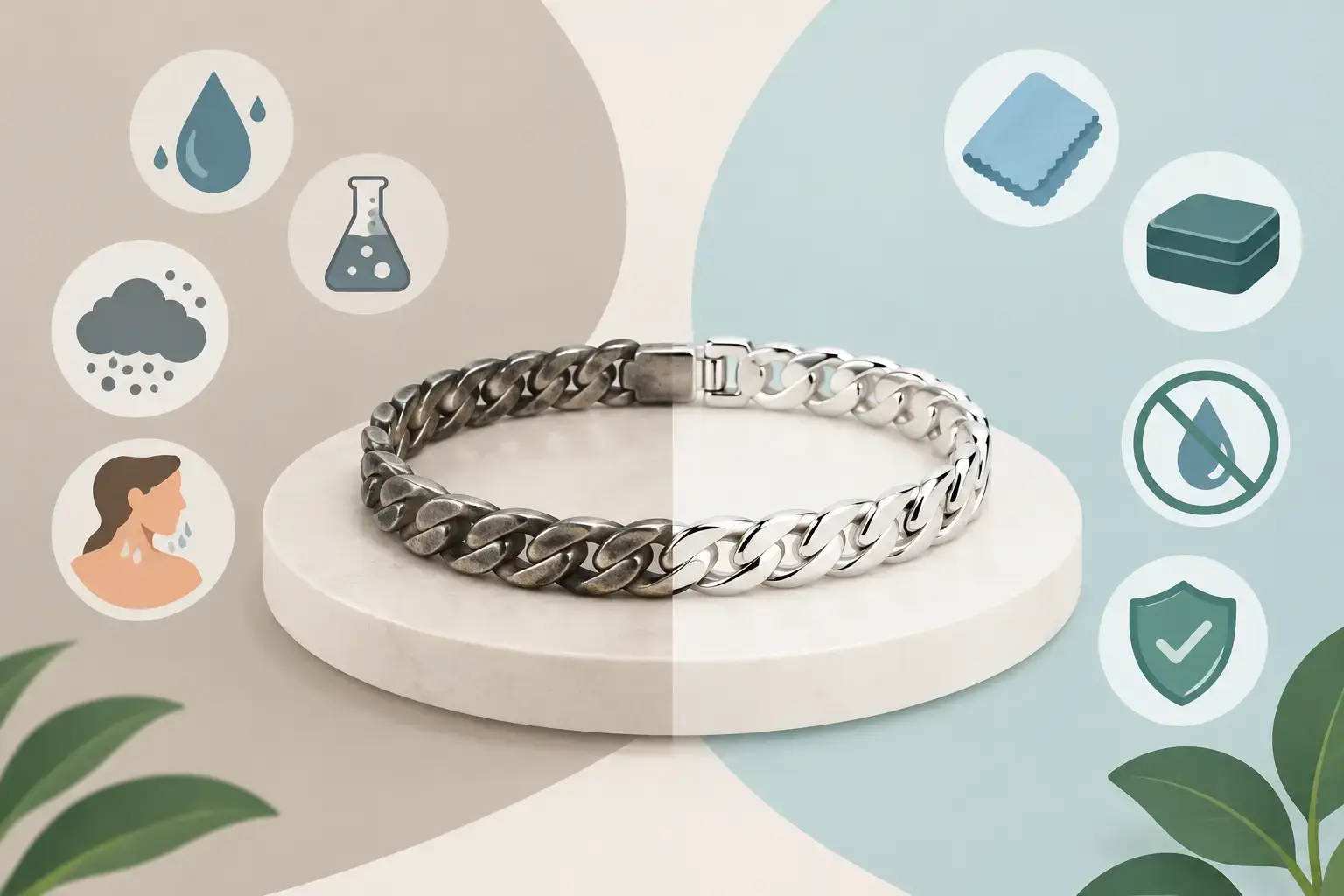
That favorite bracelet can look beautifully bright one week and a little dull the next, especially when it is part of your everyday stack. The good news is that bracelet tarnishing causes are usually ordinary parts of life, not a sign that you chose the wrong piece. Moisture, body chemistry, beauty products, and storage all play a role – and a few gentle habits can make a real difference.
Tarnish is especially common with fashion jewelry and metal components used in handmade designs. It does not erase the creativity, color, or meaning behind a piece. It simply means the metal surface has reacted with elements in its environment. Once you understand what is happening, you can wear your bracelets with more confidence and care.
What Tarnish Actually Is
Tarnish is a surface change that happens when certain metals come into contact with oxygen, sulfur compounds, moisture, or chemicals. Silver may develop a gray, brown, or black cast. Brass and copper can deepen to a warm brown or develop greenish oxidation. Gold-tone finishes may lose some shine when their protective plating wears down or when residue builds up on the surface.
Not every metal reacts the same way. Solid gold is highly resistant to tarnish, while sterling silver, brass, copper, and many plated metals need more attention. Stainless steel generally holds up well, but even it can look less bright when coated with lotion, soap, or oils.
For handmade jewelry, materials often come together in thoughtful combinations: metal charms, clasps, chains, beads, polymer clay elements, and decorative findings. Each material has its own personality and care needs. A bracelet can remain lovely for years when the whole design is treated gently.
The Most Common Bracelet Tarnishing Causes
Moisture and humidity
Water is one of the biggest reasons bracelets lose their sparkle. Shower steam, damp bathrooms, rainy-day errands, handwashing, and sweat all expose metal to moisture. Humidity can cause trouble even when a bracelet is not being worn. Leaving jewelry on a bathroom counter or in an open dish near a sink gives moisture plenty of time to settle in.
Chlorinated pool water and saltwater deserve extra caution. Both can be hard on metal finishes, elastic cord, glue, and delicate components. A beach day calls for carefree color, but it is best to leave your favorite handmade bracelet safely at home before swimming.
Skin chemistry and sweat
Two people can wear the same bracelet in the same conditions and get different results. That is because skin chemistry varies. Natural oils, perspiration, and the skin’s pH can speed up tarnishing for some wearers, especially during hot weather, workouts, or busy days spent outdoors.
This is not a cleanliness issue, and it does not mean your jewelry is poor quality. It is simply chemistry. If you know your skin tends to affect metal quickly, rotating your bracelets and wiping them after wear can help preserve their finish.
Lotion, perfume, and beauty products
Hand cream is wonderful for dry hands, but it can leave a film on bracelets. Perfume, hairspray, sunscreen, makeup, hand sanitizer, and body oil can do the same. Over time, that residue may make metal look cloudy, dull, or uneven. Certain ingredients can also react with plated finishes.
A simple rule helps: let your beauty routine settle before putting on jewelry. Apply lotion, fragrance, and sunscreen first, then give them a few minutes to absorb. Your bracelet should be the finishing touch, not the first thing to meet a fresh layer of product.
Everyday chemicals
Cleaning sprays, dish soap, laundry products, and even some household air pollutants can contribute to tarnish. The risk is higher with silver, copper, and brass, but plated metals can be affected too. Taking bracelets off before cleaning, washing dishes, or doing a hands-on project is a small step that protects a piece you love.
Air exposure and improper storage
Jewelry does not have to be worn to tarnish. Oxygen and sulfur in the air can slowly affect exposed metal, particularly in humid spaces. Tossing several bracelets together can also lead to scratches, tangled chains, and bead wear.
Store each piece in a dry, soft-lined compartment, a small pouch, or a sealed bag. For sterling silver, an anti-tarnish strip can be useful. The goal is not to lock your jewelry away forever. It is to give it a clean, calm place to rest between outfits.
Why Plated Bracelets Need Extra Care
Gold-tone and silver-tone bracelets are often plated, meaning a thin layer of metal creates the finish over a base metal. This allows for affordable, expressive designs with plenty of style, but the surface layer is more delicate than solid precious metal. Friction, sweat, chemicals, and repeated water exposure can gradually wear it down.
That does not make plated jewelry less worthy of your jewelry box. It just means expectations should match the material. A plated statement bracelet is often best saved for regular wear rather than showers, sleep, swimming, or intense exercise. Thoughtful care helps it stay vibrant longer, and rotating your accessories gives every favorite its moment.
How to Keep Bracelets Bright Longer
Start by taking your bracelet off before bathing, swimming, exercising, cleaning, or applying heavy hand cream. These moments account for many bracelet tarnishing causes, and avoiding them is easier than trying to reverse damage later.
After wearing your bracelet, gently wipe metal areas with a soft, dry microfiber cloth. This removes fingerprints, moisture, and surface oils before they have time to settle. Avoid rough paper towels, tissues, and abrasive cloths, which can scratch finishes or snag textured details.
When a bracelet needs a little more attention, use the gentlest method that fits its materials. A dry jewelry polishing cloth can work well for plain sterling silver or sturdy metal components. Be careful with plated finishes, painted beads, polymer clay, porous stones, pearls, rhinestones, and pieces with glued elements. Strong dips, ultrasonic cleaners, toothpaste, baking soda scrubs, and harsh polishing compounds can cause more harm than good.
If you are unsure, clean only with a soft dry cloth or ask the maker about the specific materials. Handmade jewelry is often made with details that deserve a more delicate approach than a one-size-fits-all cleaning trick.
When Tarnish Is Not the Whole Story
Sometimes what looks like tarnish is actually product buildup. A cloudy bracelet may brighten after a gentle wipe. Dark spots on silver may be oxidation, while a faded area on a gold-tone clasp may be plating wear. Green discoloration on skin can happen when copper-containing metal reacts with sweat and moisture. It is usually harmless, though it can be annoying.
It also helps to recognize when a repair is more useful than cleaning. If elastic has stretched, a clasp has weakened, or a metal finish has worn away in high-friction areas, polishing will not restore the original surface. A thoughtful repair, replacement finding, or redesign may give a beloved bracelet a new chapter.
Let Your Jewelry Be Part of Your Ritual
Caring for bracelets does not need to feel fussy. Think of it as a tiny closing ritual at the end of the day: take off your jewelry, give it a gentle wipe, and place it somewhere dry and protected. That moment of care honors the artistry behind the piece and helps keep the colors, beads, and metal details ready for your next outfit.
Your bracelets are meant to add personality to ordinary days, celebrate special ones, and remind you that style can be playful and personal. Wear the pieces that make you feel like yourself, then give them the simple care they need to keep shining alongside you.