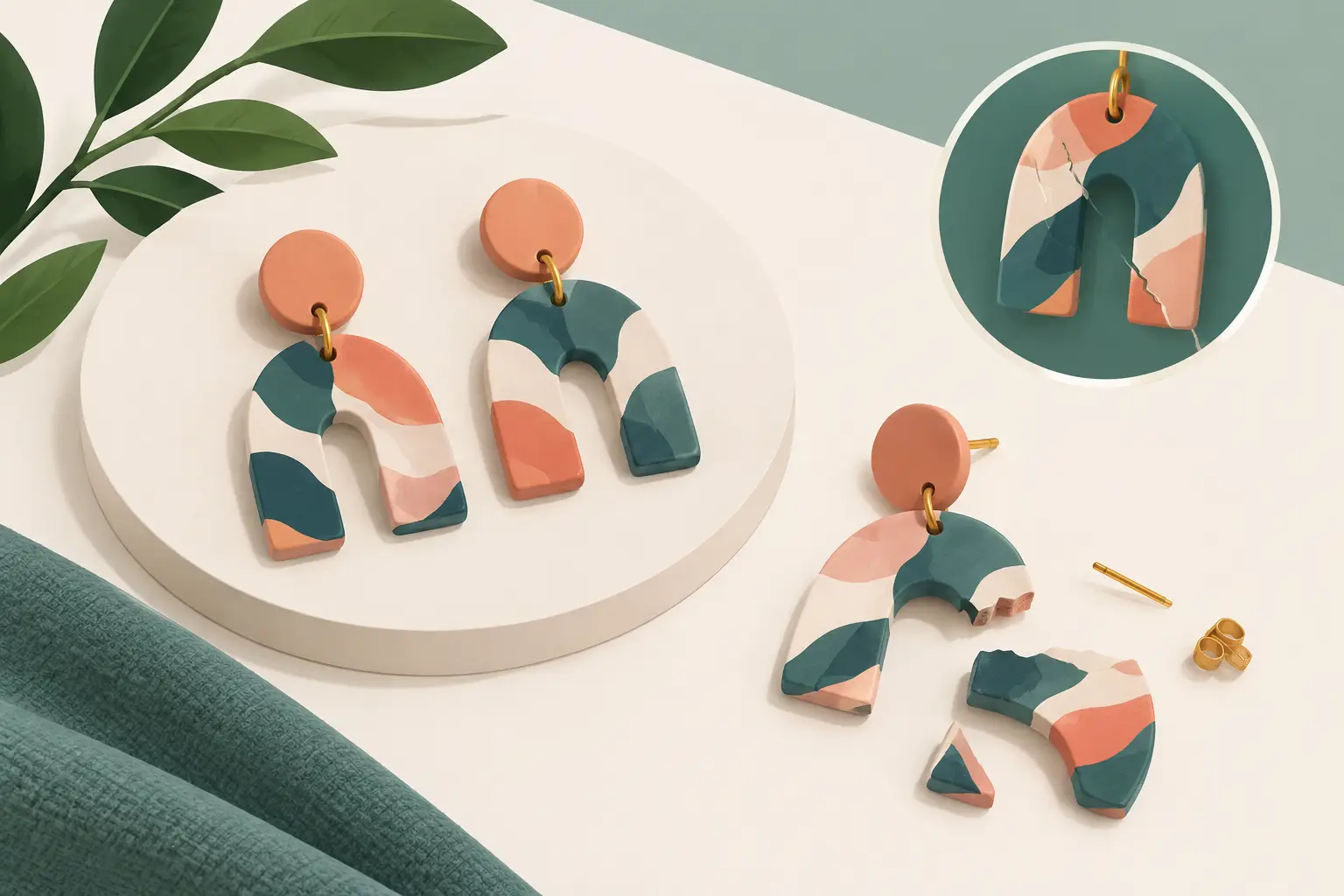
A bright pair of handmade clay earrings can feel wonderfully lightweight, but that does not mean they are indestructible. So, can polymer clay jewelry break? Yes, it can – especially if it is dropped on a hard floor, bent sharply, made too thin, or cured incorrectly. The good news is that well-made polymer clay jewelry is designed for real wear and can stay beautiful for years with a little thoughtful care.
Polymer clay has a special place in handmade jewelry because it offers color, texture, and artistic freedom that metal and mass-produced materials simply cannot copy. Every swirl, floral detail, and sculpted shape carries the maker’s hand. Understanding what gives clay jewelry strength helps you choose pieces with confidence and enjoy them without treating them like they belong behind glass.
Can Polymer Clay Jewelry Break in Everyday Wear?
Polymer clay is a durable plastic-based material once it has been properly baked, but it is not the same as metal. A finished clay earring can flex slightly, particularly when it is thin and correctly cured, yet it may snap if enough pressure is applied. Think of it as wearable art made for daily joy, not something meant to be crushed in the bottom of a crowded bag.
Normal movement is rarely the problem. Wearing earrings to brunch, work, a celebration, or a casual day out should not cause a quality pair to break. The more common risks are accidental ones: stepping on an earring, shutting it in a car door, storing it where heavy jewelry presses against it, or letting a child or pet chew on it.
Some styles naturally need more care than others. A small, rounded clay stud is less vulnerable than an oversized arch with a narrow connecting point. Long statement earrings can be sturdy and comfortable, but their shape gives them more opportunities to catch on a scarf, sweater, or hairbrush.
What Makes Polymer Clay Jewelry Strong or Fragile?
Durability begins long before a piece reaches your jewelry box. The clay itself matters, but the maker’s design choices and curing process matter just as much.
Proper curing creates flexibility
Polymer clay must be baked at the right temperature for the right amount of time. Underbaked clay is often brittle and more likely to crack or break. Properly cured clay has greater strength and a little flexibility, which is especially valuable for thinner earrings.
Overbaking can also cause trouble. Too much heat may darken light colors, scorch the surface, or weaken the finished piece. Handmade artists pay close attention to oven temperature because household ovens can run hotter or cooler than their settings suggest. That careful behind-the-scenes work is part of what makes handcrafted jewelry feel special.
Thickness and shape affect the design
A delicate petal, a slim crescent, or a tiny raised detail may look airy and effortless, but those features require smart construction. Pieces that are too thin can be more vulnerable, while very thick pieces may feel heavier than intended. The sweet spot is a design that keeps its elegant look while having enough material to support everyday wear.
Sharp corners, narrow bridges between shapes, and extra-long dangles can be stress points. This does not make them bad designs. It simply means they deserve gentler handling than a simple circle or stud.
Hardware matters, too
A clay component is only one part of an earring or necklace. Quality jump rings, securely embedded posts, strong adhesive where appropriate, and well-finished findings all help a piece hold together. If an earring post ever loosens, that is often a hardware issue rather than the polymer clay breaking.
For sensitive ears, the metal used in hooks and posts is another consideration. Choosing comfortable, skin-friendly findings helps handmade jewelry become a favorite you reach for again and again.
How to Spot Well-Made Polymer Clay Jewelry
You do not need to be a jewelry maker to recognize signs of care. Start by looking at the overall finish. A thoughtfully made piece should have smooth edges, balanced proportions, and components that hang neatly. The surface may be matte, glossy, textured, marbled, or intentionally organic, but it should look finished rather than rushed.
Look closely at attachment points. Earring posts should sit securely, jump rings should be closed properly, and layered pieces should not appear to be pulling apart. With patterned clay, the colors should feel integrated into the design instead of sitting loosely on top.
Handmade does not mean factory-perfect, and that is part of its charm. A tiny variation in pattern or a subtle handmade texture can make a piece feel personal. What you want to avoid is an actual crack, a visible weak spot, or a component that wobbles when it should be secure.
At Scott Jewelry Design, the beauty of handmade accessories is in that balance: expressive, artful details paired with the care needed to make a piece wearable and gift-worthy.
Simple Care That Helps Clay Jewelry Last
Polymer clay jewelry does not need a complicated maintenance routine. A few kind habits make a meaningful difference. Store earrings and necklaces in a soft pouch, a divided jewelry box, or a small dish where they will not rub against hard metal pieces. If you travel with statement earrings, wrap them separately rather than tossing them loose into a cosmetic bag.
Put your jewelry on after applying perfume, hairspray, lotion, or makeup. These products can leave residue on the surface and may dull certain finishes over time. Remove clay jewelry before showering, swimming, exercising, or doing chores that involve water and cleaning products.
If your piece needs cleaning, use a soft, slightly damp cloth and gentle pressure. Do not soak it. Avoid acetone, alcohol-heavy cleaners, abrasive cloths, and harsh chemicals, which can damage the finish or affect painted details. For small areas of dust, a dry soft brush can work nicely.
Heat is another quiet enemy. Do not leave polymer clay jewelry on a sunny dashboard, near a radiator, or in a hot car for long periods. Extreme heat can soften or warp a piece, especially if it is thin or has a delicate shape.
What to Do If a Clay Piece Cracks or Breaks
First, do not assume the piece is beyond saving. Many simple breaks can be repaired, particularly when the clay itself is intact and a finding has come loose. A detached earring post, jump ring, or charm may be fixable with jewelry-safe adhesive or replacement hardware. If a clay section has snapped cleanly, a maker may be able to assess whether a careful repair will be strong enough for continued wear.
A visible crack is more complicated. It can sometimes be stabilized, but a repaired piece may no longer be suited for the same amount of movement or weight. For a sentimental pair, consider whether it could become a keepsake, decorative charm, or part of a framed jewelry display rather than risking another break.
If you purchased handmade jewelry and notice a problem shortly after receiving it, take a clear photo and contact the seller. A thoughtful maker wants to know if a component failed and can often offer guidance based on the design and materials used.
The Beauty of Wearing Handmade Pieces
The question is not whether polymer clay jewelry can break, because nearly every jewelry material has limits. Fine chains tangle, gemstones chip, clasps wear, and metal can bend. The better question is whether a piece has been made with care and whether its style fits the way you love to wear jewelry.
Polymer clay offers something wonderfully personal: bold color without heavy weight, playful shapes, boho texture, and small artistic details that make an outfit feel more like you. Wear your favorite pair, store it with care, and let it bring a little handmade color to the moments that deserve it.