In an era defined by conscious consumption, sustainability is more than a trend. It is reshaping how we dress, decorate, and define beauty. Nowhere is this shift more surprising or inspiring than in the world of jewelry. Traditionally linked to precious metals, gemstones, and luxury materials, jewelry is being re-imagined through an unexpected medium: paper. Rolled paper jewelry was once viewed as a novelty or craft experiment. It has now emerged as a sophisticated, eco-chic art form embraced by designers, collectors, and fashion-forward consumers alike.
This rise is not accidental. It reflects broader cultural changes. These include an increased awareness of environmental impact, a desire for individuality, and a renewed appreciation for handcraft and storytelling. Rolled paper jewelry lies at the crossroads of sustainability, artistry, and innovation. It transforms humble sheets of paper into wearable statements of creativity. These pieces embody conscience.
A Brief History of Paper as Adornment
Paper has been used decoratively for centuries. From ancient Chinese paper-cutting traditions to Victorian-era paper quilling, artisans have long understood the material’s potential for beauty. Quilling involves rolling thin strips of paper into coils and shapes. This art form dates back to at least the Renaissance. During that time, nuns and monks used gilded paper to imitate expensive metal filigree for religious art.
However, paper jewelry as a distinct category is relatively recent. In the 20th century, avant-garde artists began experimenting with unconventional materials. They challenged the notion that jewelry must be rare or costly to be valuable. Paper, ephemeral and accessible, became a quiet symbol of rebellion against traditional luxury norms.
In the 21st century, environmental concerns and the handmade revival gave paper jewelry new relevance. What was once fragile and temporary evolved into durable, wearable art through improved techniques, sealants, and design innovation.

What Is Rolled Paper Jewelry?
Rolled paper jewelry is created by tightly coiling strips of paper into beads, discs, or sculptural forms. These forms are then assembled into necklaces, earrings, bracelets, rings, or brooches. The paper may be recycled magazines, books, maps, sheet music, handmade paper, or sustainably sourced new paper.
Once rolled and shaped, the paper elements are typically sealed with non-toxic glazes, varnishes, or resins. This process enhances durability, water resistance, and longevity while preserving the paper’s natural texture and printed patterns.
The result is jewelry that is:
- Lightweight and comfortable to wear
- Visually striking, often featuring bold colors or graphic patterns
- Surprisingly durable, capable of lasting years with proper care
- Uniquely individual, since no two paper rolls are exactly alike
The Sustainability Factor
At the heart of rolled paper jewelry’s appeal is sustainability. Conventional jewelry production often involves mining. It also involves chemical processing and significant environmental disruption. In contrast, paper jewelry can be created with minimal ecological impact.
Upcycling and Recycling
Many designers use discarded materials such as magazines, old books, newspapers, or packaging. This not only diverts waste from landfills but also gives new life to objects with history and character.
Low Carbon Footprint
Paper jewelry typically requires fewer resources and less energy than metal or gemstone jewelry. The tools are simple, and the process is often done by hand rather than through industrial manufacturing.
Ethical Production
Rolled paper jewelry is frequently handmade by independent artisans or small studios. This supports local economies, fair labor practices, and transparent supply chains.
Minimal Waste
Scraps of paper can often be reused. Failed components are biodegradable or recyclable. This is not the case with metal or plastic waste.
For eco-conscious consumers, wearing rolled paper jewelry is not just a style choice—it is a statement of values.

Craftsmanship and Technique
While the material may be simple, the craftsmanship behind rolled paper jewelry is anything but. Creating high-quality pieces requires patience, precision, and a deep understanding of structure and form.
The Rolling Process
Strips of paper are cut to precise widths and lengths. Then they are rolled tightly into coils. This is done by hand or with a small tool. The tension must be consistent to ensure strength and uniformity.
Shaping and Design
Rolls may be left circular or pinched into teardrops, ovals, marquise shapes, or abstract forms. Multiple rolls can be layered or combined to create complex patterns.
Color and Pattern Play
Printed paper adds depth and unpredictability. A single roll might reveal dozens of colors and text fragments, making each bead a miniature collage.
Sealing and Finishing
Once assembled, the jewelry is sealed to protect against moisture and wear. The finish can range from matte and organic to glossy and glass-like, depending on the artist’s aesthetic.
The final pieces often rival traditional jewelry in complexity and beauty, proving that craftsmanship—not material cost—defines value.

Aesthetic Versatility: From Minimal to Bold
One of the most compelling aspects of rolled paper jewelry is its versatility. Designers have pushed the medium in countless directions, resulting in styles that suit a wide range of tastes.
- Minimalist Designs feature neutral tones, simple shapes, and subtle textures, perfect for everyday wear.
- Bold Statement Pieces use oversized forms, vibrant colors, and dramatic silhouettes, turning jewelry into wearable sculpture.
- Nature-Inspired Collections mimic leaves, flowers, seeds, or shells, emphasizing organic forms and eco themes.
- Graphic and Modern Styles draw on typography, maps, or architectural lines for a contemporary look.
- Cultural and Story-Driven Pieces incorporate text, symbols, or imagery with personal or historical significance.
Because paper can be cut, colored, and shaped so freely, it allows for an almost limitless design language.

Challenging Traditional Ideas of Luxury
Rolled paper jewelry challenges long-held assumptions about luxury. Instead of rarity and permanence, it emphasizes creativity, intention, and meaning.
In this context, luxury becomes:
- Personal, not mass-produced
- Ethical, not extractive
- Expressive, not status-driven
Wearing paper jewelry signals a shift in priorities—from accumulation to appreciation, from cost to craft. It invites conversation and curiosity, often surprising those who expect jewelry to be heavy or metallic.
This redefinition aligns with broader changes in fashion, where consumers increasingly value authenticity and story over logos and price tags.
The Role of Storytelling
Every piece of rolled paper jewelry carries a story. The source material alone can be deeply evocative—pages from a novel, a vintage map, or a handwritten letter. Designers often intentionally choose papers that add narrative layers to their work.
For the wearer, this creates an emotional connection. Jewelry becomes more than decoration; it becomes a keepsake, a reminder, or a personal symbol. In a world saturated with disposable fashion, this sense of meaning is powerful.

Rolled Paper Jewelry in the Fashion World
What was once niche has gained mainstream attention. Rolled paper jewelry now appears in galleries, museum shops, eco-fashion shows, and curated boutiques. Fashion editors and stylists increasingly feature these pieces in spreads focused on sustainability and innovation.
Designers appreciate paper jewelry’s dramatic visual impact combined with its feather-light wearability. For runways and photo shoots, it offers bold scale without physical weight—a practical and aesthetic advantage.
Social media has also played a key role. It allows artisans to share process videos. They can provide behind-the-scenes glimpses that highlight the labor and creativity involved. These insights deepen appreciation and build loyal communities around the craft.
Caring for Rolled Paper Jewelry
Despite its durability, paper jewelry benefits from mindful care.
- Avoid prolonged exposure to water or humidity.
- Store pieces in a dry place, ideally in a jewelry box or pouch.
- Handle gently, especially with larger or more intricate designs.
With proper care, rolled paper jewelry can last for many years, aging gracefully and retaining its beauty.
The Future of Rolled Paper Jewelry
As sustainability continues to influence design across industries, rolled paper jewelry is poised for continued growth. Innovations in eco-friendly coatings, bio-resins, and paper engineering are expanding what is possible with the material.
We can expect to see:
- Increased collaboration between fashion designers and paper artists
- Greater experimentation with scale and mixed media
- Expanded use of storytelling and customization
- Continued blurring of boundaries between jewelry, art, and design
Ultimately, rolled paper jewelry represents a hopeful vision of the future. Creativity thrives within ecological limits. Beauty is redefined through intention and imagination.

Conclusion: Beauty with a Conscience
Eco-chic adornments like rolled paper jewelry show us that elegance can be planet-friendly. It does not have to come at the expense of the planet. By transforming an everyday, often discarded material into something precious, artisans challenge our perceptions of value. They invite us to rethink what we choose to wear—and why.
Rolled paper jewelry is light on the body, gentle on the earth, and rich in meaning. In its coils and curves, we find a powerful message. Sustainability and style are not opposites. They are partners in shaping a more thoughtful, beautiful world.
Ready to roll? Here’s a tutorial from Mod Podge Rocks.

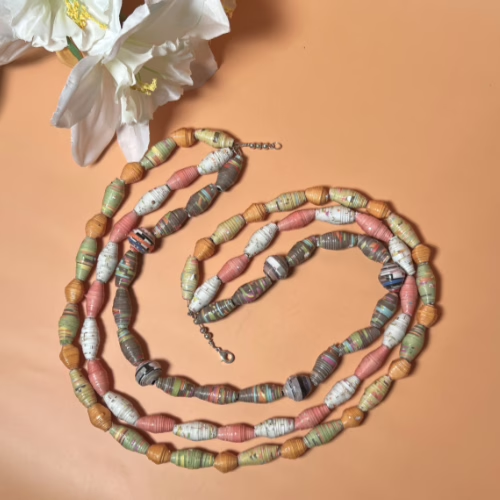
Carnival Paper Bead Necklace
This Carnival Paper Bead Necklace consists of 3 Strands of Rolled Paper Beads, Silver-plated Necklace Components including Lobster Claw Clasp
1 in stock