A bracelet can be beautiful on the screen and still feel wrong the moment it lands on your wrist. Too snug, and it distracts you all day. Too loose, and it slides, spins, or catches when you reach for your coffee. That is why a good guide to handmade bracelet sizing matters so much, especially when you are choosing a piece meant to feel personal, expressive, and easy to wear.
Handmade bracelets have a different charm than mass-produced accessories. They are often designed with specific materials, bead sizes, closures, and drape in mind. That character is part of what makes them feel special, but it also means sizing is not always one-size-fits-all. A stretchy beaded bracelet will fit differently than a clasp bracelet, and a chunky statement piece will sit differently than a slim strand with delicate spacers.
Why handmade bracelet sizing feels different
When you shop handmade, you are not just buying a standard accessory off an assembly line. You are choosing something crafted with intention. The bead shape, cord thickness, metal components, and closure style all affect how the bracelet rests on the wrist.
For example, a bracelet made with round natural stone beads has more structure than one made with small seed beads. A leather wrap bracelet behaves differently than a simple elastic style. Even two bracelets with the same listed length may feel different once worn because width, weight, and flexibility change the fit.
That is why bracelet sizing is not only about wrist measurement. It is also about how you like your jewelry to feel. Some people love a close, neat fit that stays in place. Others want movement and a relaxed boho drape. Neither is wrong. The best size depends on your comfort, your style, and the design itself.
How to measure your wrist correctly
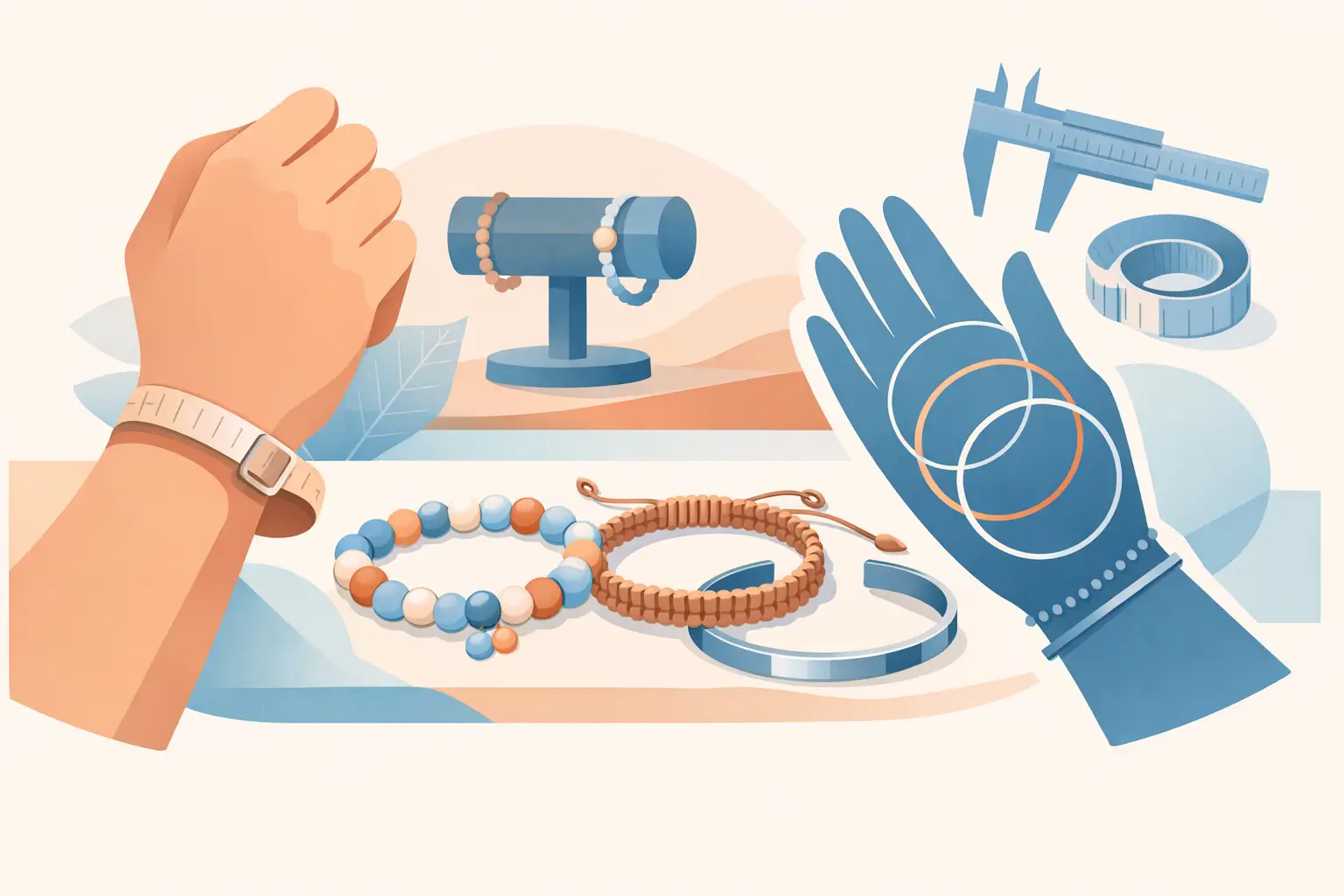
The easiest way to start this guide to handmade bracelet sizing is with your actual wrist measurement. You do not need special tools. A soft measuring tape is ideal, but a strip of paper or string works too.
Wrap the tape or string around your wrist just above the wrist bone, which is the spot where most bracelets naturally sit. It should feel snug against the skin, but not tight. If you are using string or paper, mark the overlap point and then measure it against a ruler.
This number is your wrist size, not your bracelet size. That distinction matters. Your bracelet usually needs extra room beyond your wrist measurement so it can move comfortably and close properly.
If you are between sizes, keep that in mind before choosing. A wrist that measures 6.25 inches may be more comfortable in a 6.5-inch or 6.75-inch bracelet depending on the design. Small differences can change the feel quite a bit.
Wrist measurement versus bracelet length
People often confuse these two numbers, and it leads to disappointing fit. Your wrist measurement is the circumference of your wrist. Bracelet length is the total inside fit or finished length of the bracelet itself.
If your wrist measures 6.5 inches, you usually would not want a bracelet that is exactly 6.5 inches unless you prefer a very fitted style and the bracelet is made to wear close. Most handmade bracelets need a bit of ease added.
A common starting point is to add about 0.25 to 1 inch, depending on the look and feel you want. Delicate bracelets can often work with less extra room. Chunkier beaded designs usually need more because larger beads take up space on the inside of the bracelet and can make the fit feel tighter than the measurement suggests.
A simple fit guide for handmade bracelets
There is no single perfect formula, but there are reliable starting points that help. If you want a fitted bracelet, add about 0.25 to 0.5 inch to your wrist measurement. If you want a classic comfortable fit, add about 0.5 to 0.75 inch. If you love a looser, more relaxed fit, add about 0.75 to 1 inch.
This is where personal preference comes in. Someone who types all day may prefer a bracelet that stays more in place. Someone stacking bracelets for a layered boho look might want more movement. A gift shopper may choose a slightly more forgiving fit if they are unsure, but not so loose that it feels sloppy.
The design should guide your choice too. A slim chain bracelet with an extender gives you more flexibility. A structured cuff needs a more exact fit at the wrist opening. A stretch bracelet can be forgiving, but if it is too small, it will strain the elastic and sit awkwardly.
Guide to handmade bracelet sizing by bracelet type
Different bracelet styles behave in very different ways on the wrist, so the best size often depends on construction.
Stretch bracelets
Stretch bracelets are popular for good reason. They are easy to slip on, comfortable for everyday wear, and especially lovely in handmade beaded designs. They do best with a fit that feels secure but not tight. If they are too small, they stretch more than they should and may wear out faster. If they are too large, they can twist and gap.
For stretch styles, a close but comfortable fit usually works best. Larger beads may require a little more room than smaller beads because of how they curve around the wrist.
Clasp bracelets
Clasp bracelets often feel a bit more polished and can offer more precise sizing. Lobster clasps, toggle closures, and magnetic clasps all have slightly different wearing experiences. A clasp bracelet usually needs enough length to close comfortably without pulling, especially if the bracelet uses chunky beads or thicker materials.
If a clasp style includes an extender, that gives you a little breathing room. It is a nice option when you want flexibility for layering or gifting.
Cuff bracelets
Cuffs are less about full circumference and more about wrist shape and opening width. Some are adjustable, but many should only be gently shaped once or twice, not bent constantly. A cuff should feel secure without pinching. If it slides too far down the hand or leaves marks, the fit is off.
Wrap bracelets
Wrap bracelets are stylish and expressive, but sizing can be more specific. The total length, the number of wraps, and the closure placement all affect fit. Even a small difference in wrist size can change how neatly the bracelet wraps. These styles are often best when measurements are checked carefully.
How bead size and materials affect fit
This is one of the most overlooked parts of bracelet shopping. A bracelet made with 4 mm beads and one made with 10 mm beads may have the same listed length, but they will not feel the same on your wrist.
Larger beads create more bulk on the inside curve, which can make the bracelet feel tighter. Stiffer materials also reduce flexibility. Natural stone, wood, glass, clay, and metal all bring a different weight and structure to the design.
If you love bold handmade bracelets with statement beads, give yourself a bit more room. If you prefer delicate strands or flexible chain styles, you may be happy with a closer fit.
Sizing for gifts can be tricky, but not impossible
Buying a bracelet as a gift feels thoughtful and personal, but guessing the size can be stressful. If you cannot measure the recipient’s wrist directly, try to think practically. Does she usually wear fitted jewelry or looser layers? Is her style delicate and minimal, or colorful and statement-making?
If you have access to a bracelet she already wears often, measure that piece from end to end if it has a clasp, or measure the inner circumference if it is a bangle or stretch style. That can give you a much better starting point than guessing based on clothing size, which is not very reliable for bracelet fit.
When in doubt, a slightly adjustable bracelet is often the safest gift option. At Scott Jewelry Design, that handmade-meets-wearable balance is part of what makes artisan jewelry feel so giftable.
Common sizing mistakes to avoid
One of the biggest mistakes is measuring too loosely. If the tape is already hanging away from the wrist, the final bracelet may end up much too large. Another common issue is ignoring bracelet thickness. Chunky beads and layered materials almost always need more room than flat or delicate styles.
It also helps to think about the hand, not just the wrist. A non-stretch bracelet has to go over the hand or open wide enough to clasp with ease. And if you swell slightly in warm weather, after exercise, or during travel, that can affect comfort too. A perfect winter fit may feel different in July.
Finding the fit that feels like you
The best bracelet size is not just the one that technically fits. It is the one that supports how you move through your day and how you want your jewelry to feel. Maybe that means a softly draping stack that shifts with every gesture. Maybe it means one meaningful beaded bracelet that sits neatly at the wrist and goes with everything.
Handmade jewelry has heart in it, and sizing is part of that experience. Taking a few extra minutes to measure well, think about materials, and choose your preferred fit can make the difference between a bracelet you admire and one you truly love wearing.
If you are choosing a handmade bracelet for yourself or someone special, trust both the numbers and your instincts. The right fit should feel comfortable, flattering, and easy – like a small piece of art made to belong with you.